|
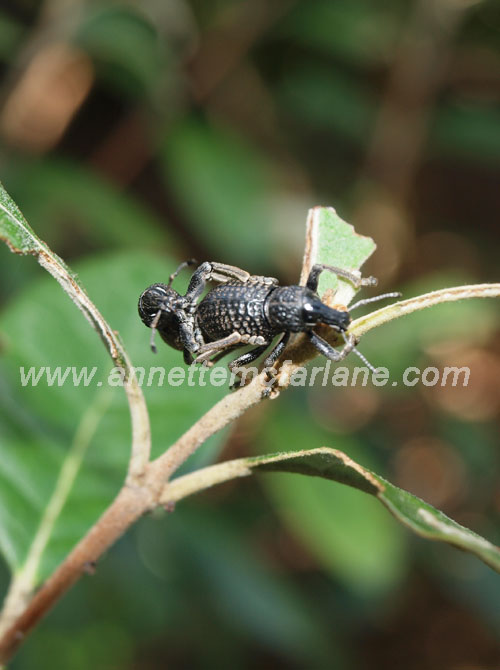
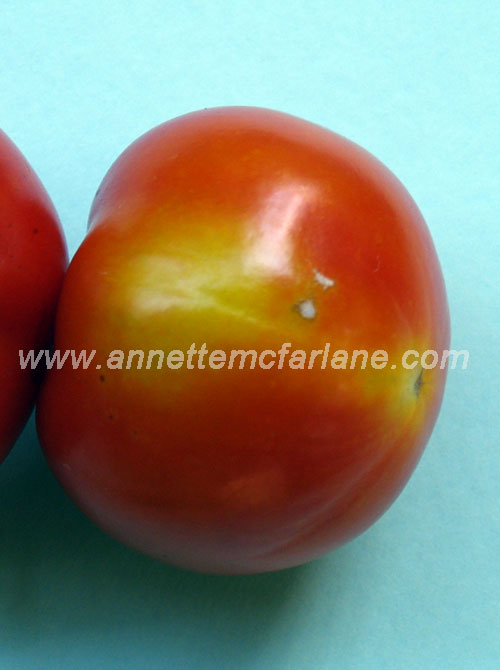
Picture The Pest |
Ants
Aphids
Beanfly
Borer
Broad Mites
on tomatoes
Bronze orange bugs
Brown rust mite
Bud mites
Cabbage white
butterfly
Case Moth
Caterpillars
Caterpillars
(General control)
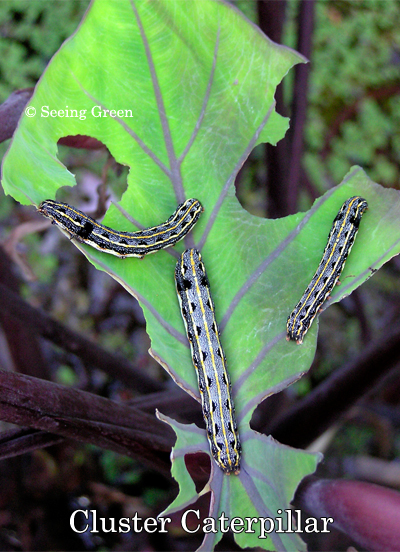
Cluster Caterpillar
Codling Moth
Crinum
Grubs
Curl
Grubs |
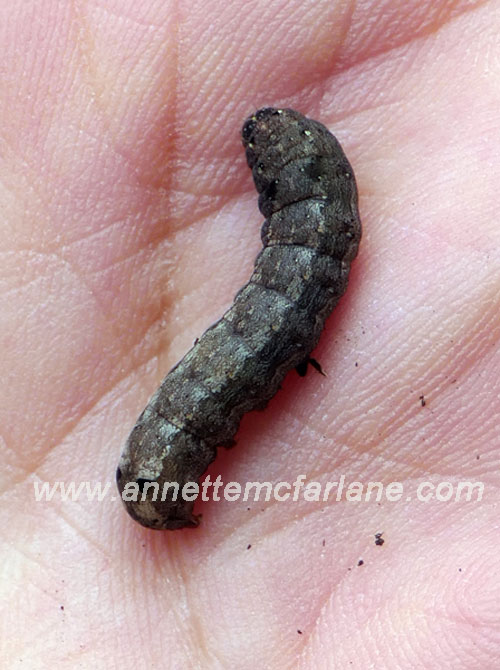
Cut-worm
Cycad
Blue Butterfly
Dendrobium beetle
Dodder
Erinose mite
Fig leaf
beetle
Fruit Fly
Fruit piercing moth
Funnel Ants
Galls
Gall
Wasp on citrus
Grasshoppers
Green
Vegetable Bug
Harlequin
Bugs
Helicoverpa
Herbicide
Damage
Hibiscus
Beetle |
Lacebug
Lantana Bugs
Lawn Grubs
Ladybeetle (Twenty-eight spotted
Leaf
Miner
Leaf
Miner on citrus
Looper caterpillar
Lerp
Longicorn
Beetles
Mealy
Bugs
Millipedes
Mites
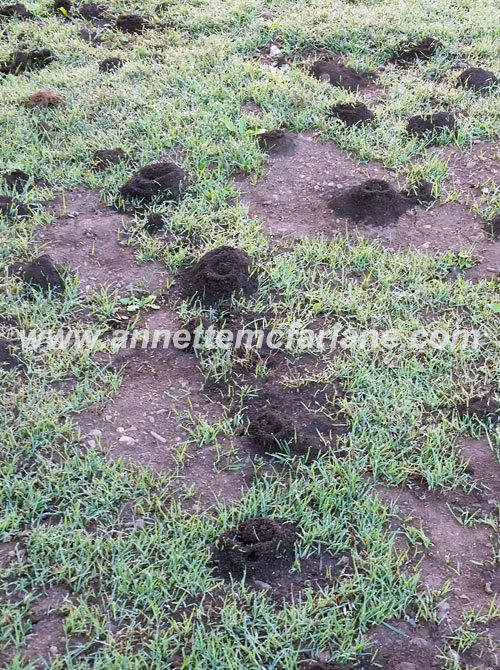
Mole
cricket
Orchard swallowtail butterfly
Pimple
psyllids on lillypilly
Possum
Rat Damage |
Red
shoulder leaf beetles
Red spider Mite
Root Knot
nematoades
Russet mite
Sawfly
Larvae
Scale
Scale
on Grass trees
Scale on roses
Seychelles Soft Scale
Snails
& Slugs
Sod web worm moth
Spined
Citrus Bug
Tea Mite
Thrips
Webbing
caterpillars
Weevils
White Flies |
Ants
Some ants have a symbiotic
relationship with many species including
aphids, scale and mealy bugs. They
defend colonies of these insects; move
them from plant to plant and use the
honeydew these insects secrete as a food
source. Gardeners in the tropics often
tolerate colonies of green ants in trees
because they defend their nests so
fiercely, they rid trees of beetles,
caterpillars and other pests.
General strategies for ant control
include applying horticultural glue
around the base of trees
followed by spraying the tops of trees
with an oil spray to control aphids,
scale, mealy bugs. Borax is a stomach
poison traditionally used as ant bait.
Mix equal parts borax with icing sugar,
jam or honey for ants attracted to
sweetness and with pet food for ants
attracted to meat. These baits are also
used to kill cockroaches. Keep out of
reach of children and pets. Organic
products include products based on
diatomaceous earth. Commercial ant
powders are often based on permethrin.
|
  Funnel
Ants Funnel
Ants
Funnel-shaped
holes surround by mounds of soil often
indicate funnel ant (Aphaenogaster
species) nests. Pasture funnel ants and
forest funnel ants are the most common
in Australia. They spend much of their
life below ground, feeding on secretions
of root mealy bugs, scale and plant root
exudates. In the evening, particularly
after rainfall or watering, the small
worker ants carrying soil to the surface
often guarded by larger soldier ants.
Control is difficult because of the
extensive network of tunnels and
numerous chambers. Apply permethrin
during the evening when ants are active.
Leave undisturbed for at least a week.
Retreat as necessary. Neem oil combined
with a wetting agent applied as a
thorough soaking drench can reduce
funnel ant numbers. Reapply every
four-six weeks. Licensed pest control
operators use persistent termite control
chemicals on funnel ants. |
|
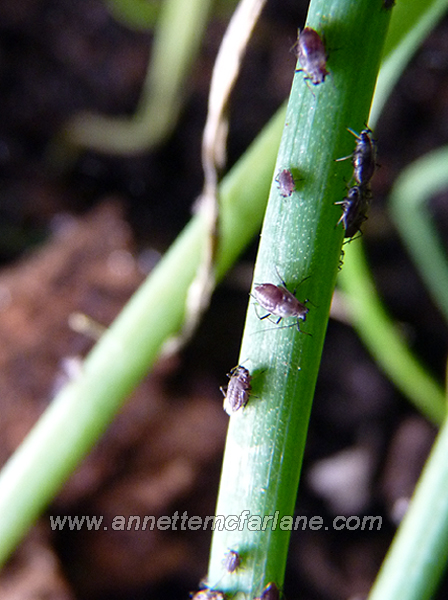
  Aphids Aphids
These sucking insects attack soft new growth.
Aphids are almost exclusively female, do not require
males for breeding and give birth to prodigious numbers
of live young. They appear in plague proportions when
conditions are mild, but disappear just as quickly in
extremes of temperature. Spring sees an explosion in
aphid populations, but hot weather and windy conditions
are enough to dispatch them. Plants with increased
uptake of nitrogen (due to fertilizer application or
increased rainfall) are more susceptible to attack.
(Pictured left: black chive aphids, right: aphids on
roses)
Reduce plant susceptibility by changing the nutritional
balance of the soil – increase levels of calcium,
magnesium, silica and potash. Soap or oil sprays see [homemade
remedies-Oil Spray], dusting with wood ash or a
strong jet of water can help to reduce numbers.
Retreatment may be necessary. Beneficial ladybeetles and
their larvae prey on aphid colonies. |
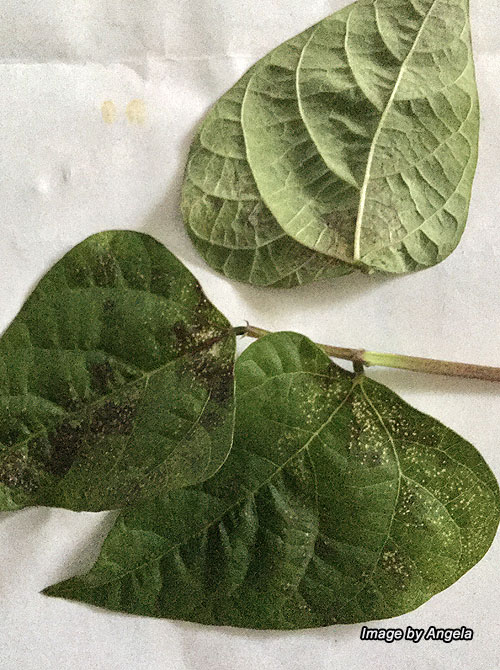
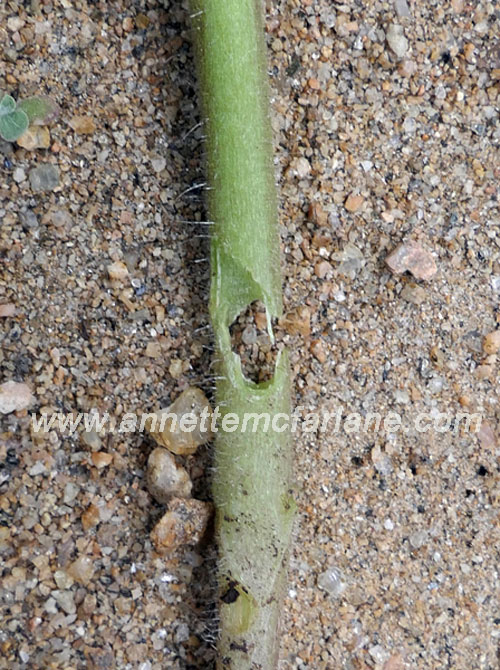
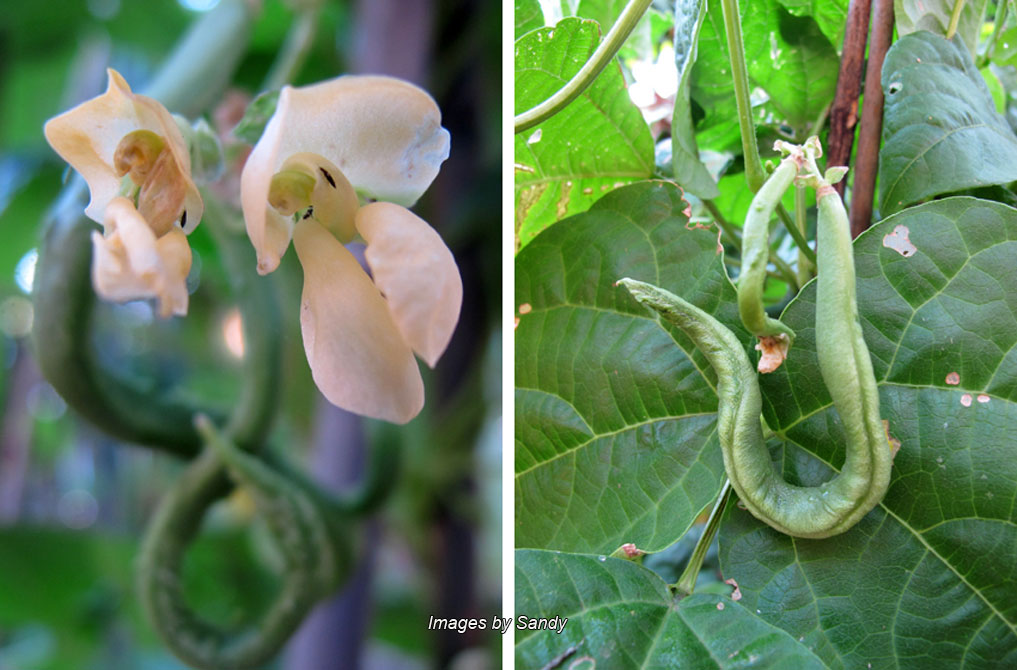
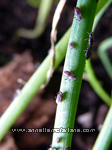
 Bean Fly Bean Fly
Bean fly (Ophiomyia
phaseoliare) are small black flies that are a major pest of edible
beans. It is important to protect plants from planting stage. Flies are
attracted to freshly sown bean seeds and young seedlings, often waiting
days for new bean plants to emerge from the soil. Look for entry points
in bean stems. Beans fail or fall over up to a month after planting as
eggs hatch into larvae that tunnel into stems. Flies also lay eggs on
foliage leaving them the covered in small, white spots. These larvae
tunnel into leaf petioles and stems. Plants that are attacked late in
the growing cycle are not worth saving.
Once you have had this pest it
is likely that it will attack future crops. Do not plant successive
crops of beans next to one another or next to other legumes. Clean any
local pea/bean weeds as they support fly populations. Plant beans during
late autumn and winter in the tropics and subtopics. Hill compost and
soil up around bean seedlings to protect stems or use paper cylinders or
small pots or recycled containers with the bottoms cut out as a
protective sleeve around each seed/seedling. Mulch plants. Use
exclusion netting over beans. Snake beans are somewhat less susceptible
to bean fly and can be planted in spring and summer. |
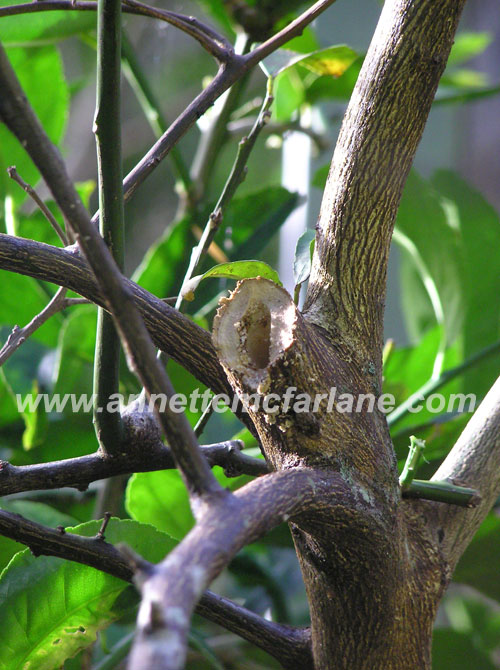
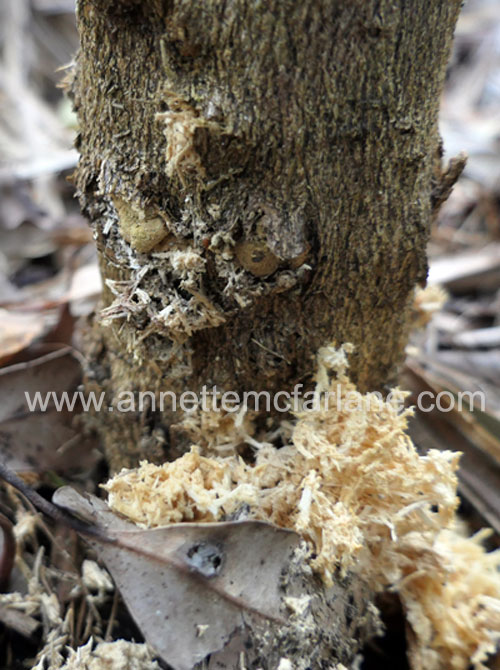
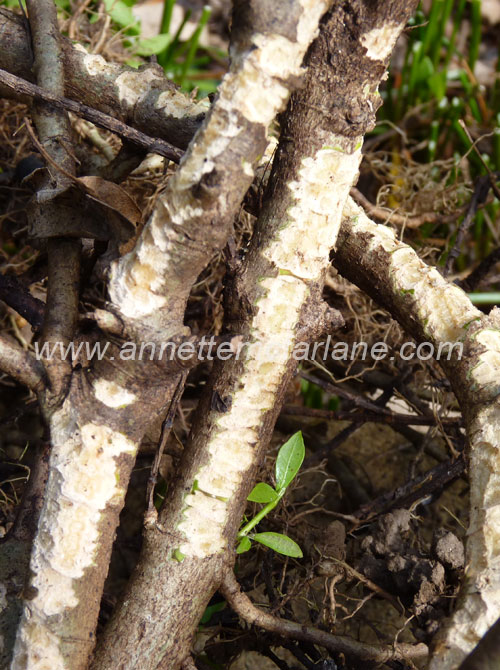
 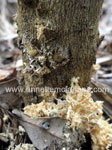 Borer Borer
Borer is a term that describes the damage done to plants
by various insects including beetle and moth larvae. A
wide range of trees and shrubs are susceptible,
particularly those stressed by drought and lack of
nutrients. Entire limbs can appear to die overnight.
Look for evidence of sawdust-like frass or oozing sap as
indications of active larvae.
Where limbs remain green it may be possible to skewer
grubs with thin wire or to syringe oil-based compounds
into borer holes. Seal these wounds with biodynamic tree
paste (link), clay or wood putty. In most instances, you
will need to prune the affected limb back below the
point of borer activity. The diatomaceous earth in
biodynamic tree paste is effective at preventing borer
attack. Assist plants to recover by alleviating
stressful conditions. |
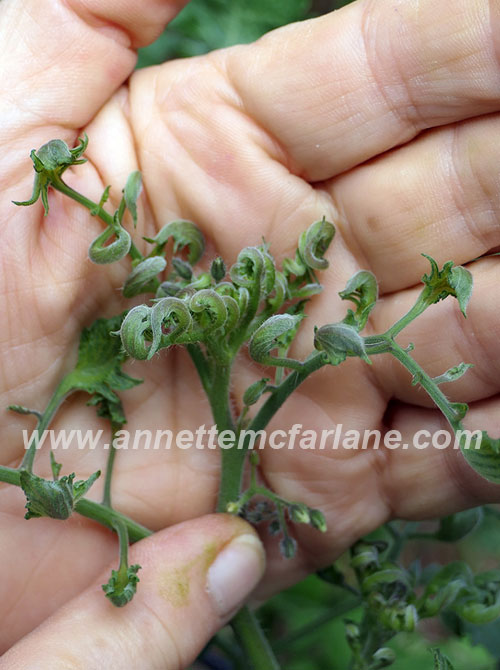
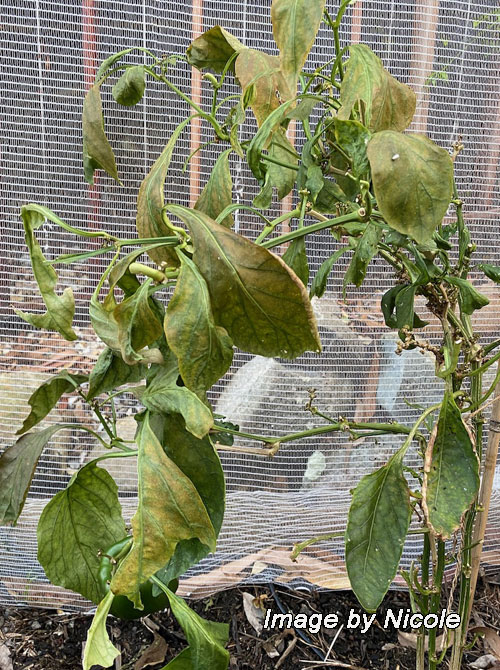
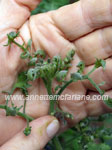 Broad
Mite Broad
Mite
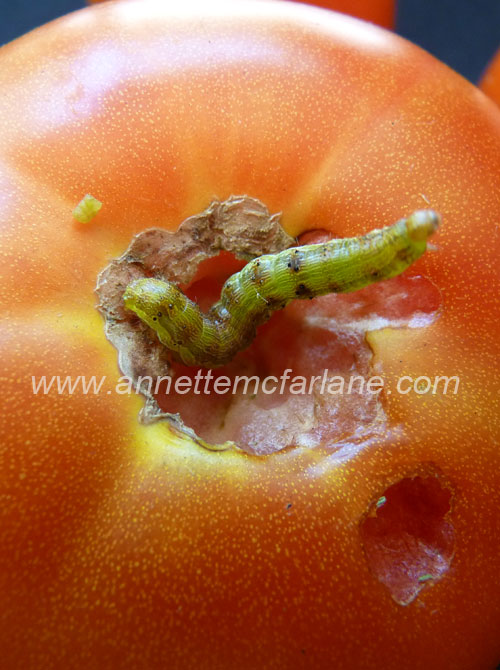
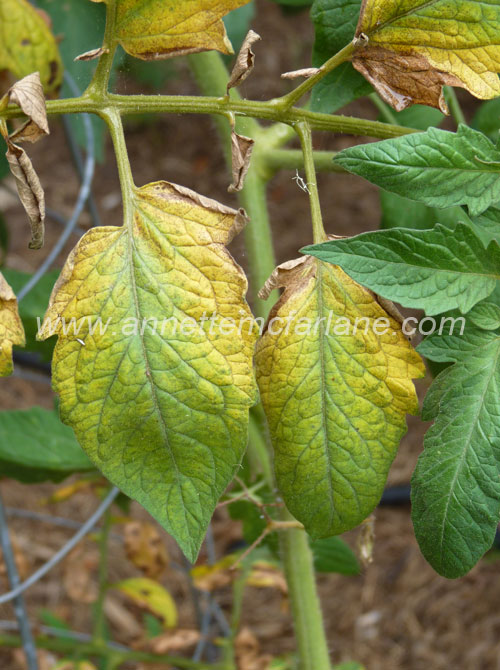
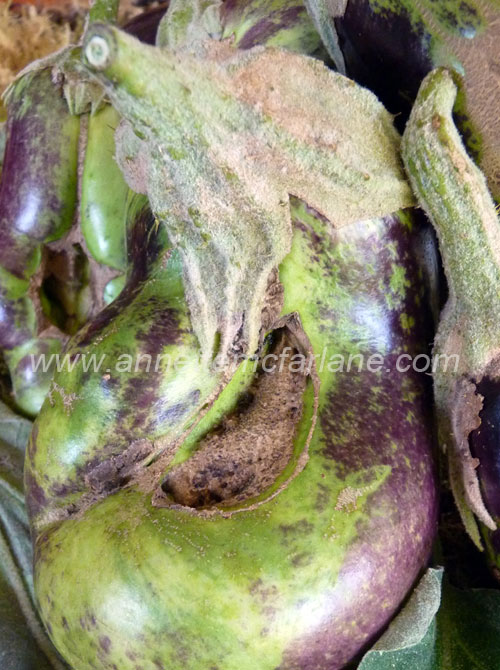
Broad mite (Polyphagotarsonemus latus) is a major pest
of tomatoes, capsicum, chilli and eggplant and many
other plants. New foliage is distorted, stunted and
often thickened. Plants fail to develop and fruit
poorly. Discolouration and fruit distortion are common.
If plants are small, dispose of them and start again.
Freeze seed for 48 hours prior to sowing. Use gloved
hands to carefully
press cold fire ash or garden lime/dolomite lime on the upper and lower leaf surfaces
and stems (without throwing it in the air; breathing it
in; or coating the soil surface). Both are alkaline and
dehydrating. Ash treatment is particularly effective on
vegetables and tomatoes. Retreat as often as necessary. [See
Mites] |
|
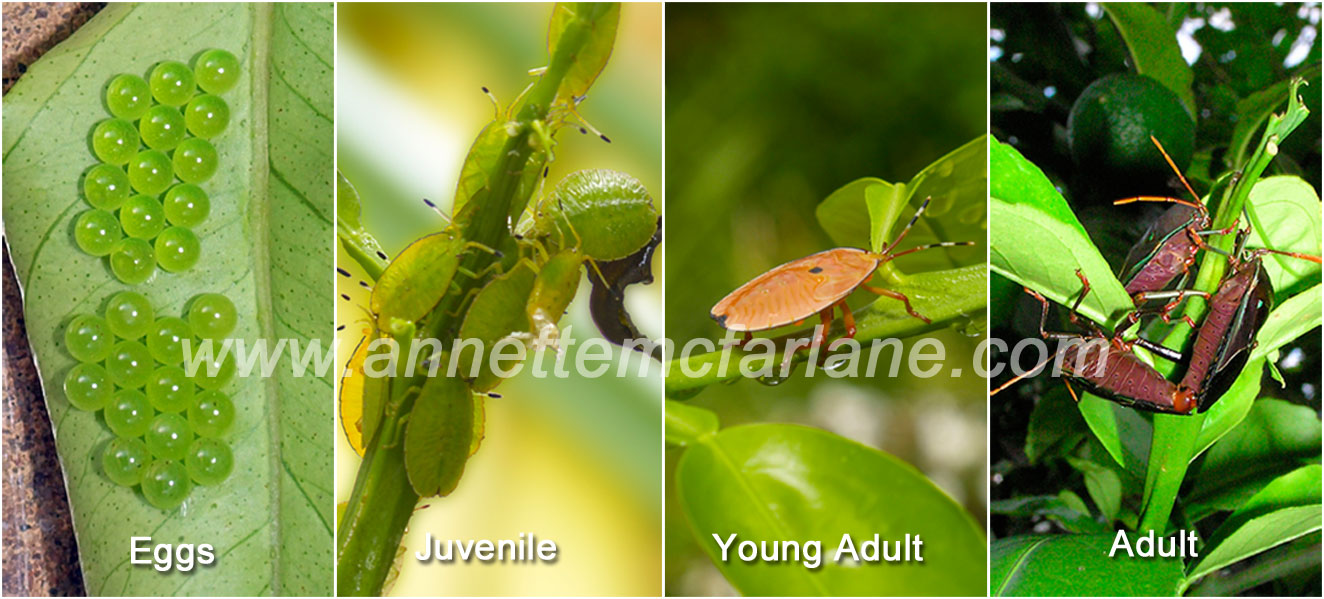
 Bronze
Orange Bugs Bronze
Orange Bugs
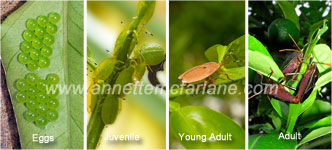
Bronze orange bugs (also known as stink bugs) The tiny
green eggs of these sucking insects lay dormant in cold
weather, emerging as green nymphs when temperatures
rise. They change colour to yellow, then to orange and
have a distinctive black spot on their backs. Mature
insects are dark brown to black. They cluster in groups
on new growth and flower and fruit stems, feeding
through a sucking proboscis. This causes new growth to
die back and flowers and developing fruit to drop. You
can often detect the presence of bronze orange bugs by
their smell.
If picking them off by hand, wear gloves and eye
protection. These bugs secrete a caustic, acrid
substance. Use a leaf blower or an old vacuum cleaner to
suck them off. Oil sprays are effective at egg and nymph
stages, but must applied so as to come in direct contact
with the insects. Sprays based on teatree oil and/or
eucalyptus including Eco-Grub control help control heavy
infestations. |
Brown Rust Mite (Phyllocoptruta
oleivora)
Brown rust mites are particularly problematic on citrus,
especially oranges. Symptoms of infestation are varied and include loss
of leaf colour, drying and cupping of foliage, rusty foliage and fruit
discolouration, distorted growth and rind hardening on citrus. Bronze
mite infestation maybe confused with melanose disease of citrus which
has similar appearance. Affected fruit are still able to be eaten.
Seasonal applications of oil sprays applied thoroughly to all parts of
the plant will keep brown rust mite infestations under control. [See
mites] |
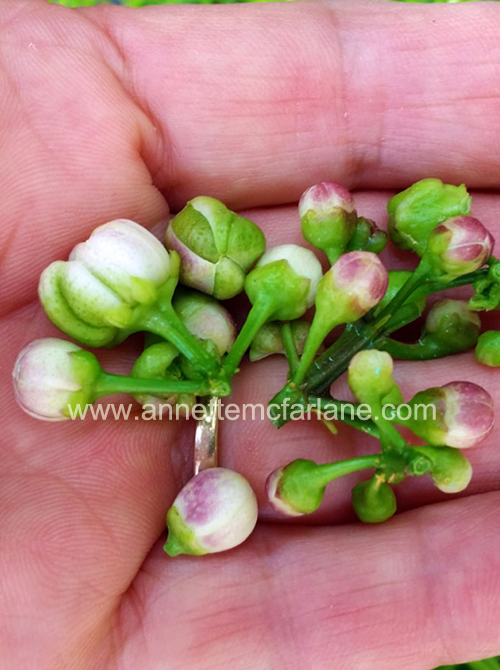
  Bud
Mite Bud
Mite
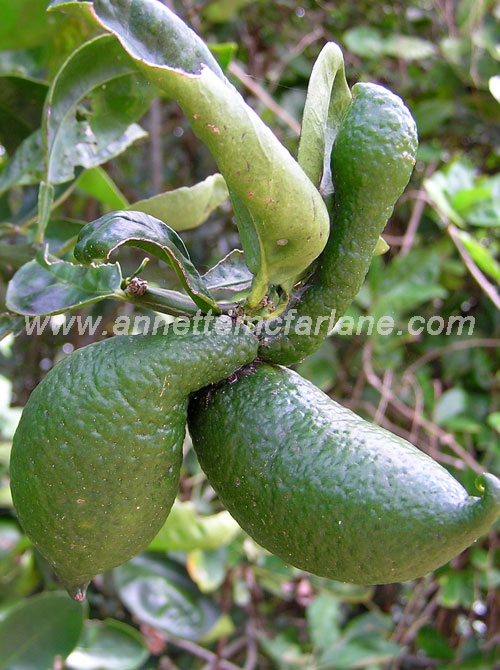
Distorted citrus flowers and fruit often indicate blooms infested with
bud mites (most likely Eriophyyes sheldoni). Wettable sulphur or oil
sprays can be used as a preventative, but once flowers and young fruit
have been affected the damage is already done and flowers and fruit should be removed.
Fruit left on the tree will develop, but will be distorted. Spray
preventatively when flower buds first form if trees have been
affected in past seasons. If large numbers of maggot-like larvae are
found in developing flowers, suspect the native citrus blossom midge
(lemons are particularly susceptible). Remove damaged flowers and treat
as for bud mite. [See
mites] |
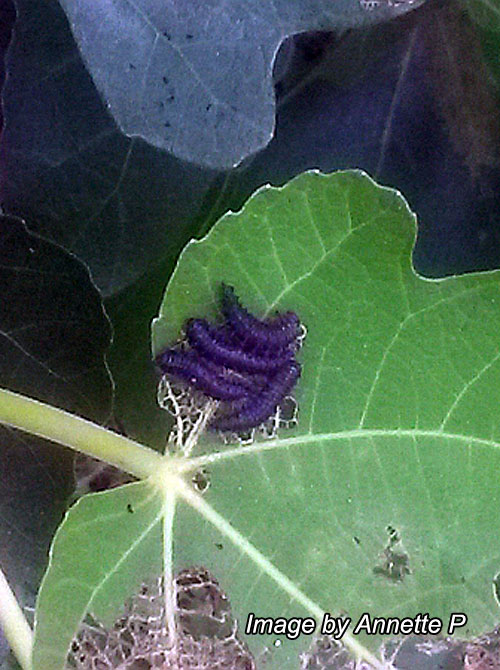
 Cabbage White Butterfly Cabbage White Butterfly
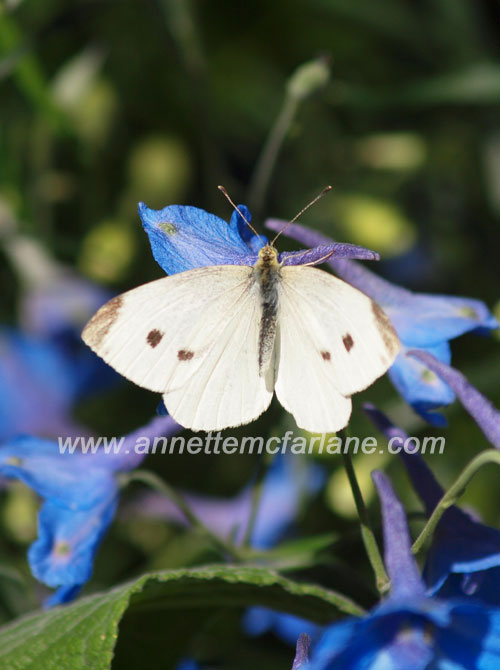
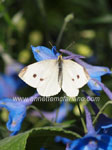
Cabbage white butterflies (Pieris rapae) are day-flying
insects that their eggs on members of the cabbage family
(broccoli, kale, cabbage, cauliflower, rocket, Asian
greens etc). Crops planted outside in all but the
coldest months are susceptible. Caterpillars of the
cabbage white butterfly recognizable by their
distinctive bright green colour, but on vegetables, this
camouflaged makes them hard to spot. Install fake female
cabbage white butterflies (DIY or store bought) used as
fluttering, decoy butterflies discourage real
butterflies from laying eggs. For more control options
General control options for caterpillars. Cabbage white
butterfly is often confused with the cabbage moth (Plutella
xylostella). Damage and controls are similar. Image of
multiple caterpillars on a kale leaf plus one of
butterfly.
|
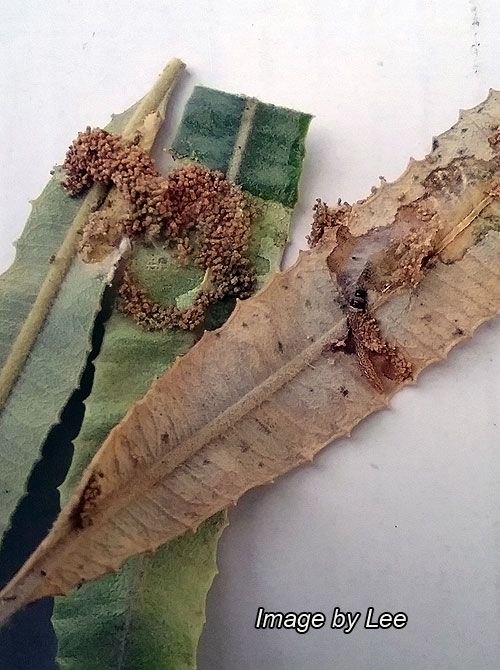
 Case
Moth Case
Moth
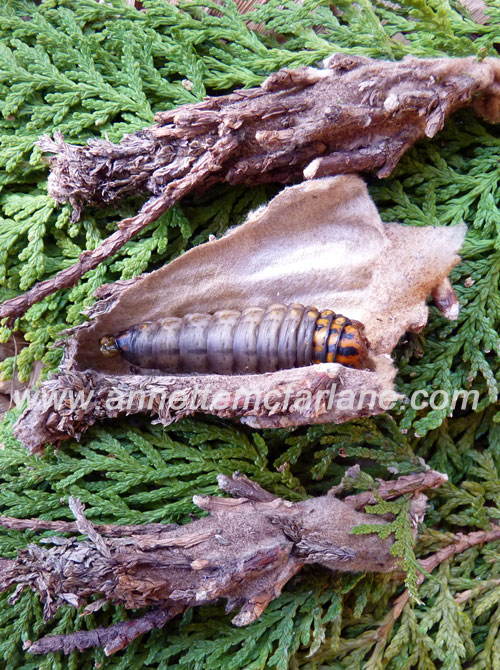
Case moth Case or bag moth is the name given to
a number of different related moths that build elaborate
bag-like structures to hide in during their caterpillar
stage. The case is typically leathery with small sticks
and leaves cleverly woven together. The head emerges
from one end of the nest to feed on plant foliage, but
retreats into its protective cover whenever threatened.
It pupates in the nest and ultimately turns into an
adult moth. The image here shows the size of the
caterpillar when the bag has been carefully cut open
with scissors. These insects are a great curiosity, but
rarely do enough damage to warrant action. Various
species of Ichneumon wasps prey on case moth larvae. |
 Caterpillars Caterpillars
Caterpillars are the larval stage of moths and
butterflies. Few gardeners worry about a couple of chewed
leaves if it means they can enjoy butterflies. However,
there are around 20 times more moth species in Australia
than butterflies and many moths are imported pests
responsible for significant damage to ornamental and
edible plants.
General control options for caterpillars:
Inspect and
hand pick off egg clusters and young caterpillars
regularly; encourage beneficial insects including
predatory wasps; use exclusion netting to keep moths and butterflies
from landing and laying eggs; apply molasses or chilli sprays;
[refer
to 'homemade
remedies']. Use a recycled hose
end connected applicator containing molasses spray for
shrubs and large trees. Use insect zapping lights
during the evening when night-flying moths are active.
Apply commercial Bacillus thuringiensis sprays (BT/Dipel).
Pheromone lures for monitoring some moth species are
available from Bugs for Bugs. See specific caterpillar
types for further control options.
|
|
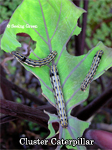 Cluster
Caterpillar Cluster
Caterpillar
These caterpillars are the larvae of nocturnal,
beige/brown-coloured moths (Spodoptera species). They are major pests of
a wide range of crops. Other common names including oriental leafworm
moth, cotton leafworm/cutworm, rice cutworm, tobacco budworm/cutworm,
tropical armyworm and taro caterpillar. Larvae colours and patterns vary
with age, but all stages are voracious feeders that cluster in
gregarious groups. Eggs and larvae can lay dormant and appear rapidly
after rain. Multiple generations of moth eggs are laid in one season.
For control options see
[General control options for caterpillars].
|
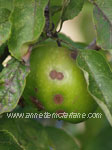  Codling
Moth Codling
Moth
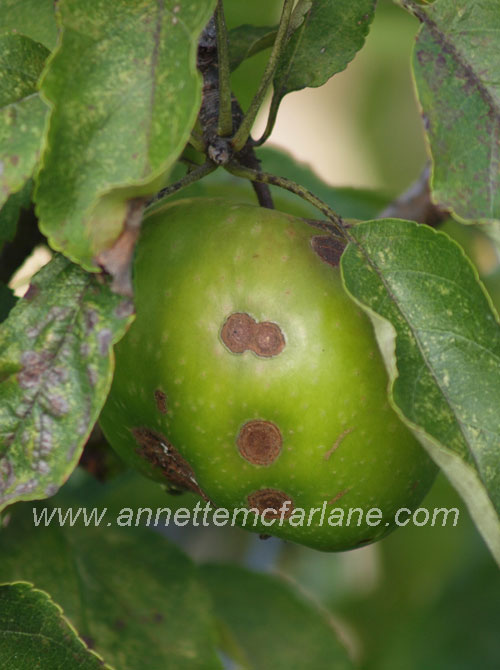
Codling moth (Cydia pomenella) is associated
with pome fruit like apples, pears and quinces. The moth
lays its eggs prior to flowering. They hatch into larvae
that tunnel into young fruit. They eat out the fruit,
emerging when they are ready to pupate. The lifecycle
continues beneath the tree in leaf litter or in cracks
and crevices in the bark.
Control eggs and young larvae
prior to flowering with oil sprays, BT, pyrethrum
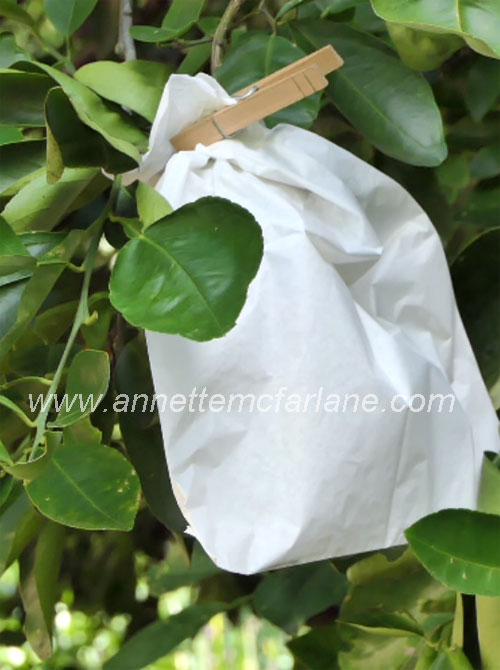
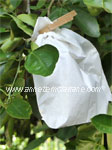
sprays; physically protect fruit with bags (ensure
larvae are not already inside); collect and catch
pupating larvae via trunk collars that act as pupa
collecting places or with sticky barriers; install
pheromone traps. Collect any infected fruit and feed it
to livestock or put in buckets then fill with boiling
water. Leave overnight before hot composting. Trigogramma wasps and pathogenic nematodes are used for
commercial control. Image Apple with codling moth damage
and tree of bagged fruit
|
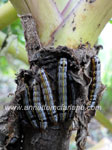  Crinum
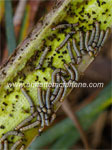
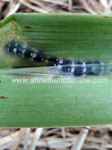
Grubs (lily caterpillars) Crinum
Grubs (lily caterpillars)
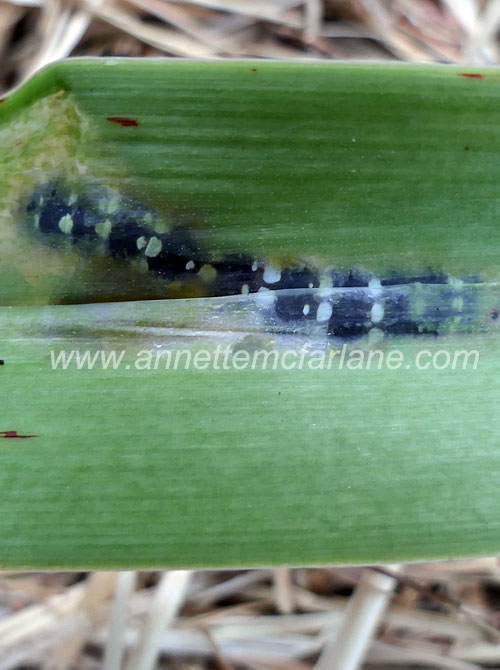
These tiny caterpillars (Spodoptera picta)
burrow into the leaves, stems and bulbs of crinum lilies, hippeastrum,
clivia, agapanthus, autumn crocus and other bulb plants eventually
eating out the succulent heart of the plant. Any of the plant that
remains usually rots due to disease. Young caterpillars have black and
white stripes, but mature caterpillars develop yellow stripes. The
larvae sequester alkaloids from bulb plants to use as part of their own
defence making them unpalatable to predators. The adult is a
medium-sized brown and cream moth. |
 Clear away any old foliage.
Thoroughly check all foliage and squash caterpillars hidden within
leaves. Check bulbs. Fill a watering can with a molasses and/or chilli
spray. The drench must come in contact with grub. Retreat regularly to
control new infestations. For more control options see
[General control options for caterpillars]. Clear away any old foliage.
Thoroughly check all foliage and squash caterpillars hidden within
leaves. Check bulbs. Fill a watering can with a molasses and/or chilli
spray. The drench must come in contact with grub. Retreat regularly to
control new infestations. For more control options see
[General control options for caterpillars]. |
 Curl
Grubs Curl
Grubs
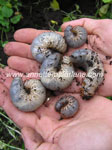
Curl grubs are the larvae of beetles. They are usually white in
colour; have a characteristic ‘C’ shape; three pairs of legs and a
distinctive head and abdomen. Common curl grub larvae found in gardens
include Christmas beetles, cane beetles, dung beetles, flower scarabs
and rhinoceros beetles. The larvae vary in size with the large
rhinoceros beetle larvae (pictured) growing up to 70mm long. Beetles lay
their eggs in the soil during warmer months. The eggs hatch into larvae
that feed on decaying organic matter. Where soil has low organic matter
(like in potted plants) grubs feed on plant roots. The larvae grow and
pupate during the cooler months of the year.
Curl grubs are eaten by
bandicoots. Small conical holes in lawns or larger excavations within
gardens are signs of bandicoot activity. Wasps also parasitise curl
grubs by piercing the skin and laying their eggs inside. The young wasps
hatch and live inside the body, eating the non-essential tissues of the
curl grub before finally emerging through the body wall of the larvae
and ultimately causing its death. Larvae of the African black beetle and
scarab cockchafer that attack lawns may warrant control. Drench or spray
affected plants with molasses spray, [refer
to 'homemade
remedies'];
use tea tree based products like Eco-Grub; apply spinosad sprays. Repeat
applications may be required during spring, summer and autumn. See also
[Lawn grubs] |
   Cut-worm Cut-worm
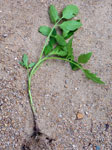
Cut-worms are the larvae of nocturnal moths. Infestations vary from one
season to the next, but can occur in plague proportions. Larvae feed on
seedlings and the soft foliage of vegetables and flowering plants.
Seedlings can be nibbled off at ground level and holes appear in the
foliage of more established plants. Cut-worm larvae are hard to spot and
generally impossible to see during daylight hours. Check plants after
dark with a torch and remove all larvae that have emerged from the soil
and mulch. Repeat this for several evenings. Drench affected a plants
with molasses [refer
to 'homemade
remedies'].
Repeat as necessary to treat repeat infestations. Bug zapping lights
significantly reduce cut-worm moth populations. |
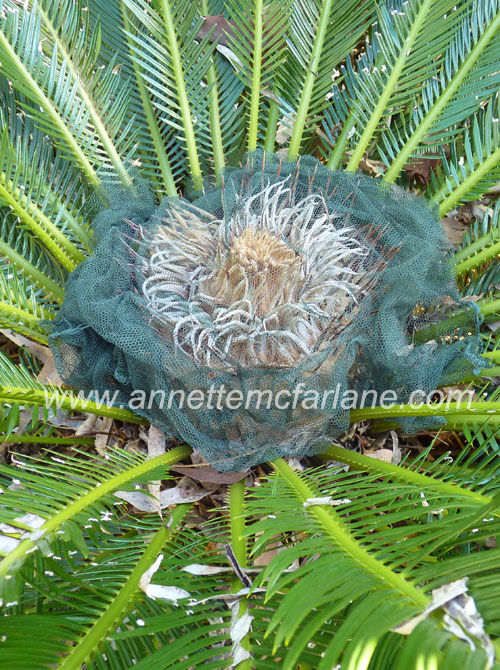
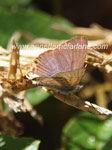  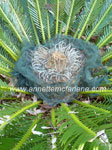 Cycad
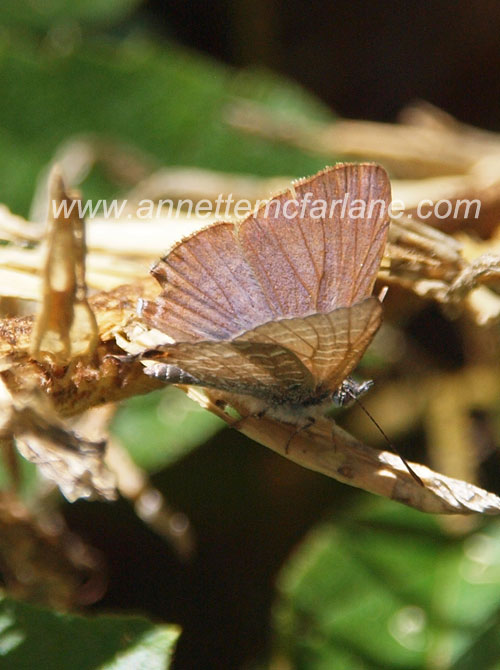
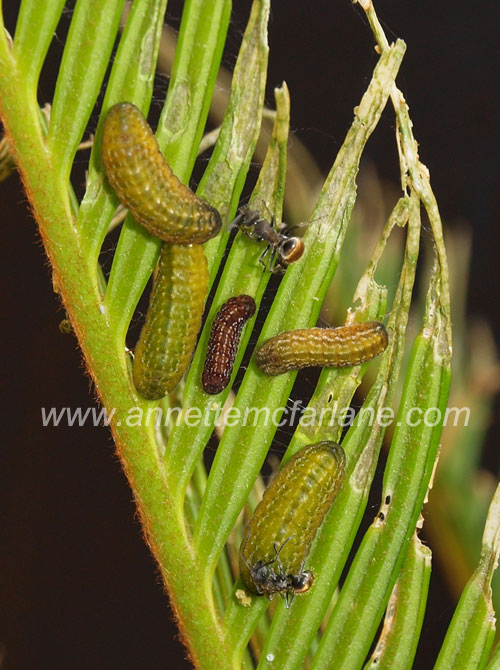
Blue Butterfly Cycad
Blue Butterfly
This small, native butterfly lays
eggs in the centre of cycad plants prior to the new
fronds emerging. Fronds either fail to appear or are
permanently ruined by the chewing of the slug-like
larvae. Ants on cycads are often an indication of the
presence of larvae on the undersides of the fronds.
Consider Zamia furfuracea as an alternative. It is
immune to attack from the cycad blue butterfly.
Tuck exclusion netting loosely over the centre of the
plant prior to new growth emerging. Leave room for the
new fronds to gradually push it off as they mature.
Mature fronds are resistant to attack. Household surface
spray applied misted in the heart of the plant at a 1m
distance (to avoid burning by propellant) helps protect
plants. Apply this during the cool of the evening. For
more control options see General control options for
caterpillars. |
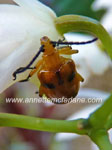 Dendrobium
Beetle Dendrobium
Beetle
This is a common pest of potted and shade
house orchids, but also attacks orchids grown in tree
forks or other natural settings. Beetles and their
larvae destroy new leaves and stems of orchids. Clean up
any old pots and any other waste materials near the
orchids or in your orchid house as this may harbour
beetles. Squash them by hand. Apply chewing insect
controls such as diatomaceous earth sprays. |
|
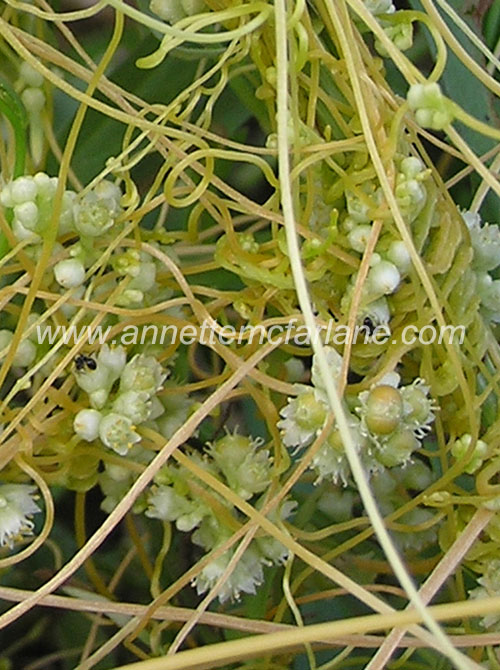
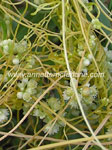 Dodder Dodder
The appearance of yellow, orange or green cotton or
string-like threads covering plants indicates
infestation by a parasitic plant known as dodder. Seeds
are distributed by birds. Dodder is difficult to get rid
of. Germinating seeds attach themselves to living
plants, drawing on their host for nutrients. They can
also carry out their own photosynthesis. This dual
nutrient source explains why dodder is able to grow so
quickly. The only option for control is complete
removal. Dodder invades the tissue of the host plant in
order to feed from it. If plants in your garden become
unwitting hosts, severe pruning or complete removal of
the plant is the only option for eradicating this
parasitic pest. These are more than 90 different species
of dodder that are native to Australia. |
|
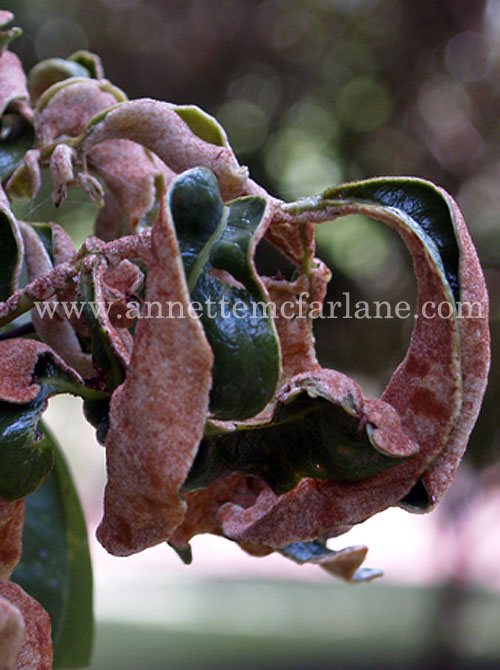
 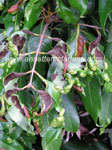 Erinose
Mite Erinose
Mite
Erinose mite is most common on hibiscus, lychee,
melicope and Eumundi quandong. On hibiscus they create
distorted new growth. On other species the leaves take
on a brown, felt-like appearance. Control can be
achieved by pruning off the worst affected areas (note
this disrupts lychee fruiting). Spray with wettable
sulphur or apply an oil spray to both sides of the
leaves [see Do It Yourself Pest Control]. Timing is all
important. Check plants regularly and spray new growth.
Pale mottling is often the first indication of
infestation. Damaged new growth and foliage does not
retain its former appearance after spraying controls the
mites. |
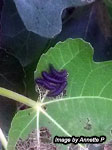 Fig Leaf Beetle Fig Leaf Beetle
Small
brown/black fig leaf beetles (Poneridia semipullata) and their slug-like
larvae (yellow then maturing to black) attack fig trees causing severe
defoliation. They are particularly devastating on cultivated backyard
fig trees as premature defoliation affects fruit production. Unseasonal
outbreaks can occur, but these pests are most likely during summer and
autumn. Active observation is the key to minimizing damage. Inspect fig
trees on a regular basis. Both adults and larvae may feed on the plant
at the same time. Pick off leaves where beetles and larvae are active.
Molasses and oil sprays [refer
to 'homemade
remedies] and
diatomaceous earth sprays can be applied. Net trees to protect foliage
from beetles and the fruit from birds. |
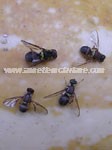 Fruit
Fly Fruit
Fly
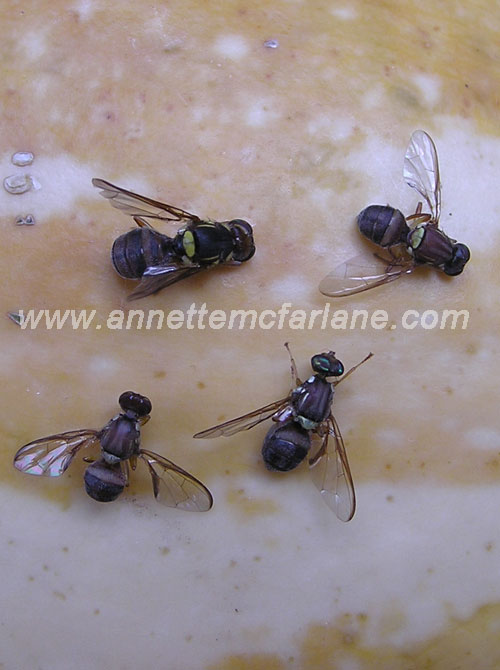
Understanding the lifecycle and passions
of Queensland fruit fly can help you
achieve a ‘wriggle-free’ harvest.
Virtually all fruit are potentially
susceptible including tomatoes,
capsicum, chillies, eggplants, citrus,
grapes, feijoa and tropical apples and
stone fruit. A fruit fly lifecycle
includes an egg, larvae (maggot), pupae
and adult stage. Eggs are laid in fruit
by female flies after they have mated.
This fruit is described as being stung.
The eggs develop into the familiar white
maggots (fruit fly larvae). Feeding
maggots cause fruit to rot. Maggots
emerge from the fruit and drop to the
ground. Fruit attacked early in the
season will partially ripen and drop
prematurely. Fruit flies pupate in the
ground, emerging weeks or months later
to mate and sting fruit. |
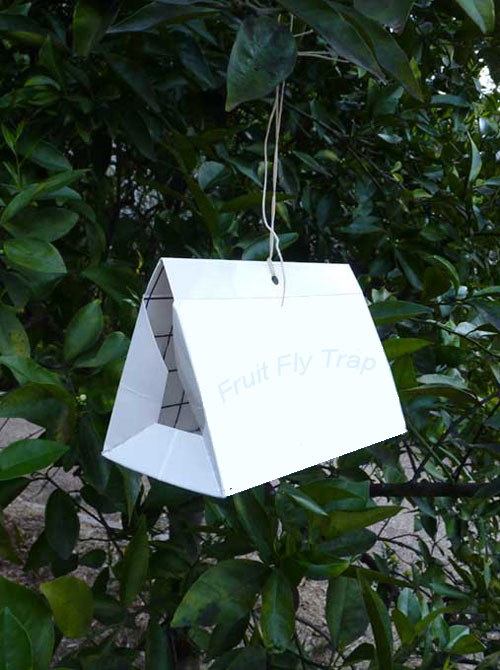
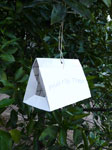 Use commercial
or DIY bait traps [see Do It Yourself
Pest Control] all year to monitor
populations and act as traps. Inspect,
empty and refill traps regularly. Remove
weed trees that support fruit fly
populations including wild loquats; pear
guavas and Brazilian cherries. Grow
susceptible crops when fruit fly
population is low (tomatoes in winter in
the tropics and subtropics). Place bags
over individual fruit immediately after
fruit set or cover entire vegetable
gardens or fruit trees with exclusion
fabric. Mulch thickly beneath fruit
trees to hamper fly emergence or free
range poultry beneath fruit trees. Pick
up fallen fruit in a bucket. Fill the
bucket with boiling water and leave
overnight before placing in the compost
or feeding to livestock. Use commercial
or DIY bait traps [see Do It Yourself
Pest Control] all year to monitor
populations and act as traps. Inspect,
empty and refill traps regularly. Remove
weed trees that support fruit fly
populations including wild loquats; pear
guavas and Brazilian cherries. Grow
susceptible crops when fruit fly
population is low (tomatoes in winter in
the tropics and subtropics). Place bags
over individual fruit immediately after
fruit set or cover entire vegetable
gardens or fruit trees with exclusion
fabric. Mulch thickly beneath fruit
trees to hamper fly emergence or free
range poultry beneath fruit trees. Pick
up fallen fruit in a bucket. Fill the
bucket with boiling water and leave
overnight before placing in the compost
or feeding to livestock.
|
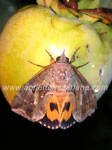 Fruit
Piercing
Moths (also called fruit sucking moths) Fruit
Piercing
Moths (also called fruit sucking moths)
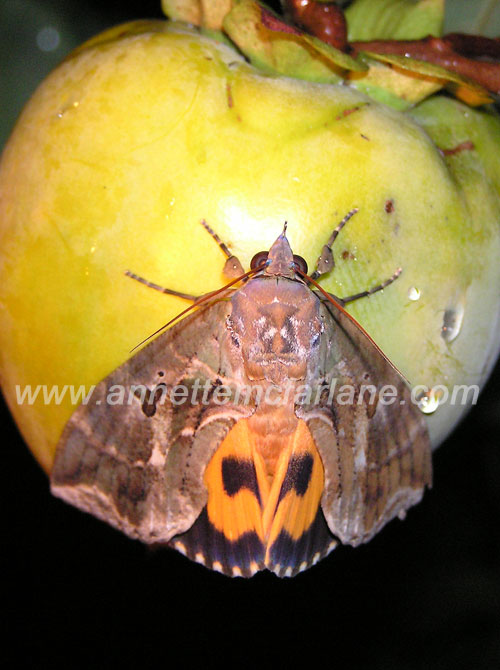
Fruit that
develop soft spots and drop prematurely may occur as a
result of fruit piercing moths. These large nocturnal
moths have large red eyes and are only seen after dark
by inspecting fruit with a torch after dark. There are
several species, but the wings are typically black, dark
brown or green, often with distinctive orange markings.
Several native vine species support larvae of these
moths. Moths pierce the skin and suck the liquid
contents of fruit. A black spot remains at the point of
entry. No larvae are present. This feature distinguishes
them from fruit fly, but not fruit sucking bugs. The
flesh around the wound becomes soft and pulpy or dry and
pithy depending on the fruit attacked.
Spraying is not a
control option. In some cases it is possible to pick
fruit before it is fully ripe, thereby beating the moths
to the harvest. For crops that require a greater degree
of ripening, cover fruit with paper bags or exclusion
fabric. Outdoor light designed to zap night flying
insects attract these moths. A standard moth trap baited
with over-ripe bananas will attract fruit piercing
moths. [video
link of fruit piercing moth] |
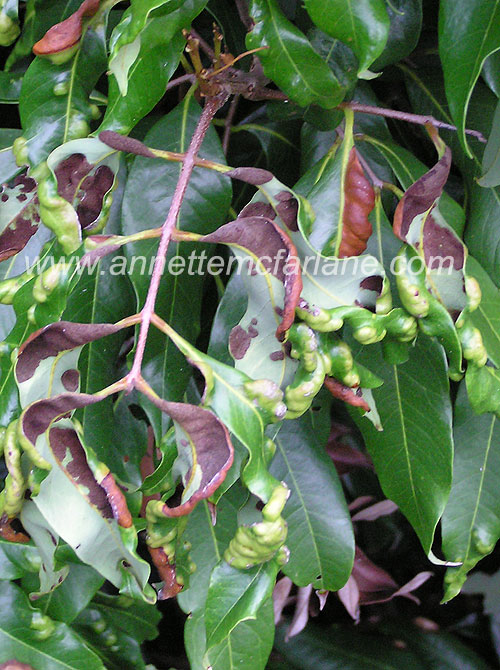
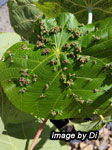 Galls Galls
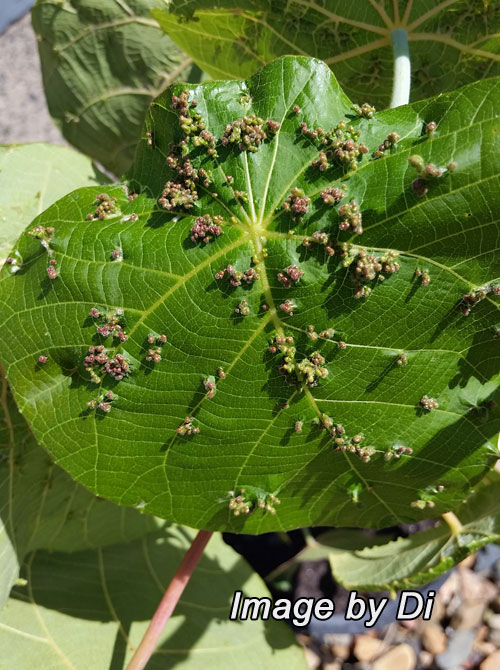
Galls are swollen
lumps or other unusual multiplication of cells and can appear on any
part of a plant. They may be caused by insects, mites, nematodes, fungi,
viruses or bacteria (see Crown Gall on diseases page). These organisms cause
irritation of plant cells via feeding or egg laying. Galls are common on
native plants, but are largely cosmetic. They rarely cause the death of
the plant and do not warrant control. If the appearance of galls
distracts significantly from plants, simply prune off and dispose of the
affected leaves. Do not compost.
|
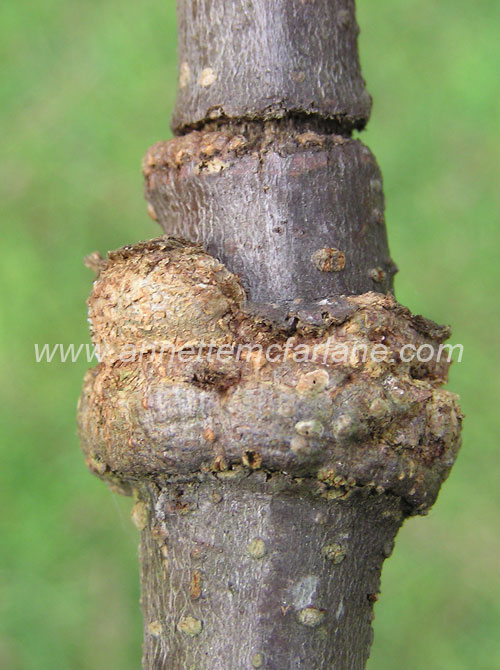
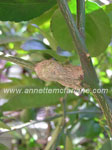 Gall
Wasp Gall
Wasp
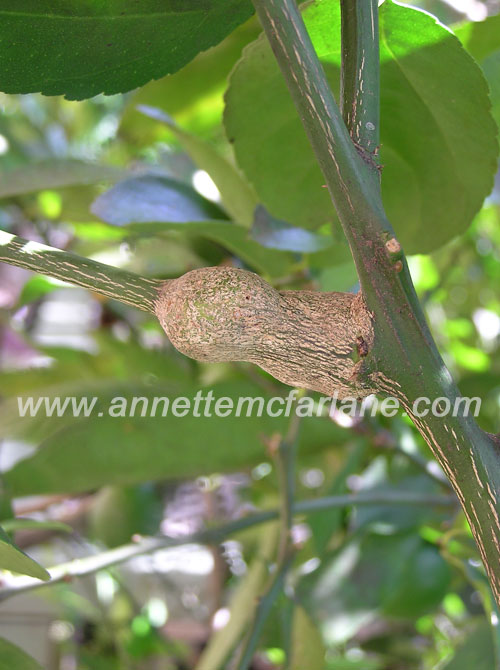
Swollen lumps on the young stems of
citrus trees signal egg-laying activity by the gall wasp
(Bruchophagus fellis). This stout, black wasp is native
to NSW and Queensland. The lumps enlarge as the wasp
larvae grow. Eggs are laid in summer and early autumn
when new growth peaks. Wasps emerge from the galls from
mid winter in the tropics and subtropics and in spring
in cooler climates. Small, native orange wasps
parasitize the larvae of citrus gall wasps. Remove the
affected stems at a leaf joint below the lump. Cut the
swollen section of stem open, if mulching or composting
the waste to expose eggs and larvae inside to
dehydration. Alternatively, dispose of affect stems
offsite or by burning. It is not essential to remove old
galls from attacks except for cosmetic reasons, as the
larvae will have already departed.
|
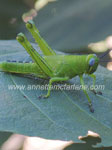 Grasshoppers Grasshoppers
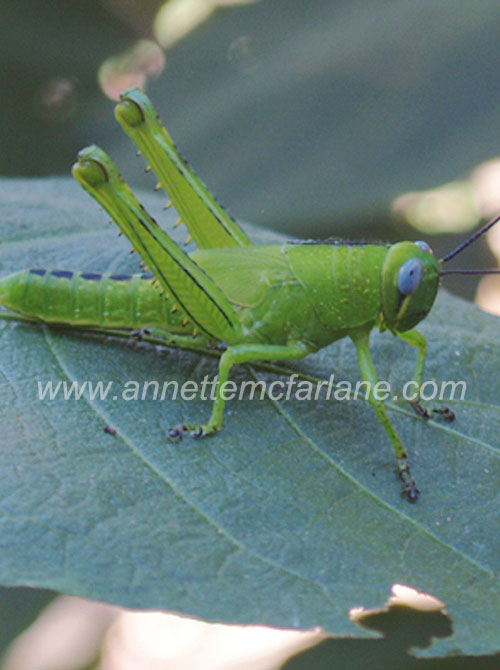
Grasshoppers are chewing pests of several different
types. They are potentially attracted to most plants.
Eggs are generally laid in the soil and emerge when soil
moisture levels and temperatures are suitable. Identify
sacrificial plants and use exclusion netting on edibles
(like mint and basil) that you wish to protect. Spraying
plants with commercial liquid silica and potash makes
them less prone to attack. Grasshoppers are slower at
dawn and dusk making them easier to catch and remove.
Free range hens, ducks and other poultry are efficient
grasshopper eaters. Use yellow sticky traps. Protect
plants with chilli sprays [refer
to 'homemade
remedies].
Beneficial wasps prey on grasshoppers as do insect
eating birds. |
 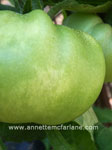 Green
Vegetable Bug Green
Vegetable Bug
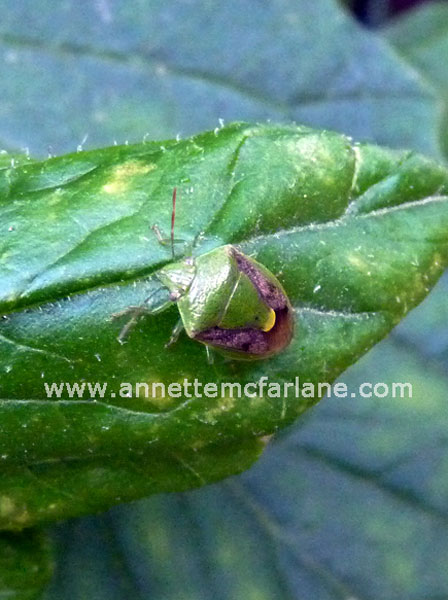
The small sucking green vegetable bug (Nezara viridula)
is a highly destructive pest and part of the stink bug
group. It has the potential to cause major damage to a
range of fruit and vegetable crops. Tomatoes, capsicum,
eggplants and beans are particularly susceptible, but
leafy greens and flowering annuals are also attacked.
Fruit and leaves develop distortions and mottling. Bugs
can be hard to spot and quickly drop from the plant when
disturbed. Green vegetable bugs are present all year
round in warm climates, but populations explode during
spring and summer. Net or bag crops when fruit first
sets to protect plants from damage. Wear gloves and
inspect susceptible plants over successive days removing bugs
when you see them. Damage can sometimes be confused with
white fly attack. |
|
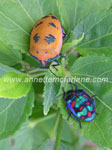 Harlequin Bugs Harlequin Bugs
Cotton
harlequin bugs can be found on members of the cotton or
Malvaceae family. This includes
hibiscus, malvaviscus, abutilon and mallow. The
metallic blue sheen of these bugs
makes them easy to spot, particularly as they congregate in large
numbers. The large, comparatively dull coloured, orange
females tend to be solitary. Female bugs lay groups of
pale pink eggs in neat clusters that encircle the stem.
You will often find her standing guard over newly laid
egg clusters. Like all bugs, cotton harlequins are
equipped with a long, sucking proboscis. They use this
tube to pierce the leaf surface and draw out the liquid
contents of the stem and leaf cells. Cotton harlequin
bugs rarely warrant control. Occasionally, the ends of
heavily infested stems droop under the weight of the
insects and appear wilted as a result of their feeding
activity. Prune off affected stems after the insects
have had their fill.
|
 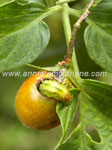 Helicoverpa
(also known as Heliothus) Helicoverpa
(also known as Heliothus)
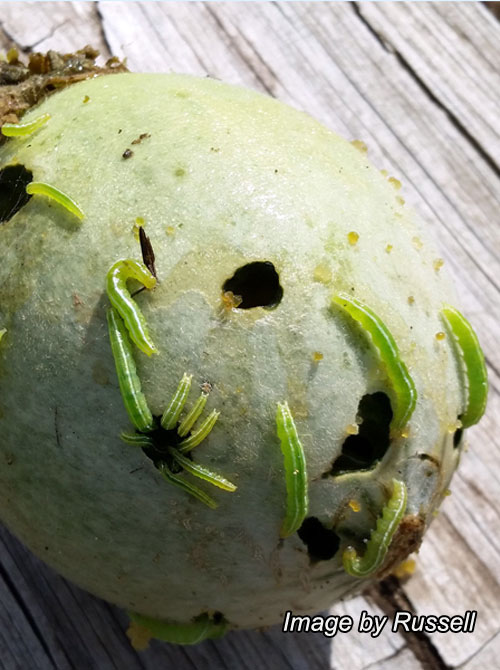
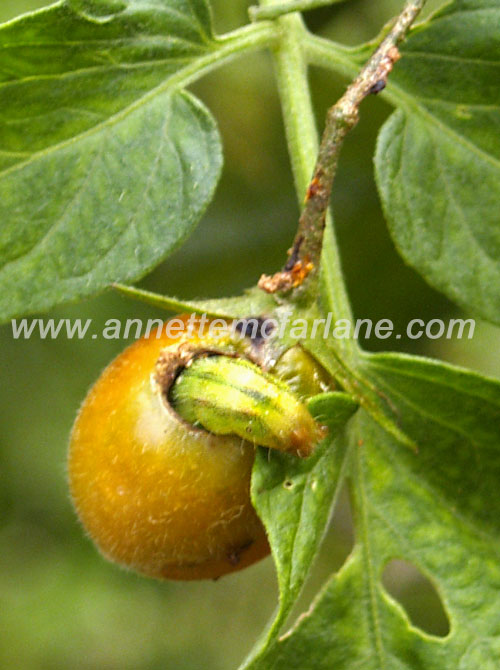
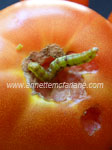
Helicoverpa (heli-co-verpa) caterpillars attack a wide
range of edible crops and lawns. Lawn army worm or lawn
caterpillars belong to this group. Adult moths are night
flying and lay eggs on leaves, flowers and grass. The
tiny caterpillars quickly burrow their way into
pinhead-sized fruit or soft stems. Affected fruit
continue to develop. Closer to harvest you may discover
holes where mature larvae have emerged to pupate in the
soil below or you may discover the larvae when you cut
into ripe fruit.
Some species including lawn caterpillars are resistant
to pyrethrum. Timing is everything. Start treating
susceptible crops prior to flowering. Use pheromone
traps attract to monitor populations of male moths. Many
bugs, beetles, ants, spiders, lacewings plus
trichogramma and ichneumon wasps prey on helicoverpa
caterpillars. For more control options see General
control options for caterpillars. |
 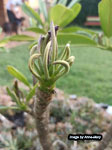 Herbicide
Damage Herbicide
Damage
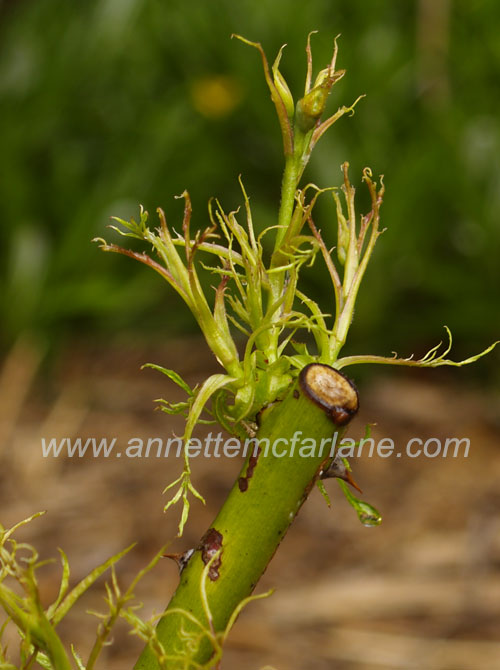
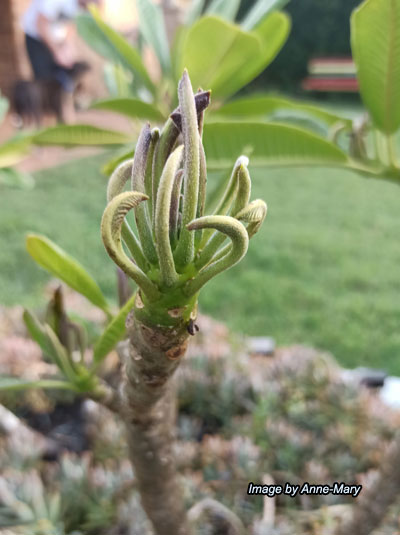
Spray drift, accumulation of herbicides in the soil and
movement of herbicides through soil in water causes
stunted growth and distorted shoots. Glyphosate; Once A
Year Path Weeder; Weed and Feed products that attach to
a garden hose and selective herbicides designed to kill
broad leaf weeds and clover in lawns most likely to be
responsible for the damage. All plants are potentially
affected. Once contact is made with plant tissue, it
cannot be removed. The plants will never grow out of the
damage even if pruned and fertilized. Remove damaged
plants. |
|
 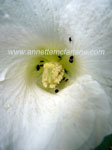 Hibiscus
Beetle Hibiscus
Beetle
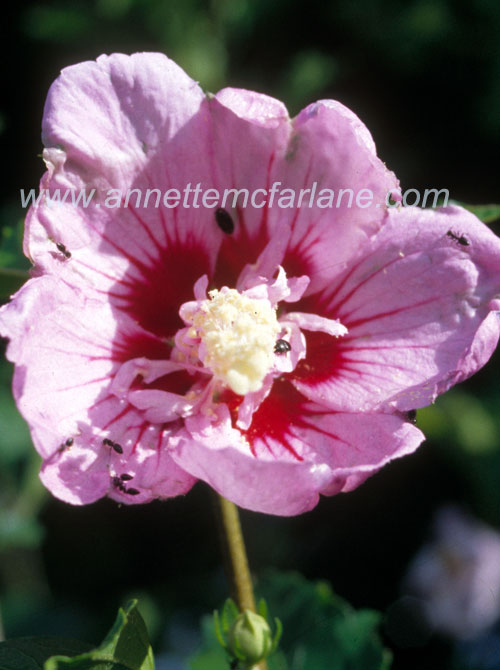
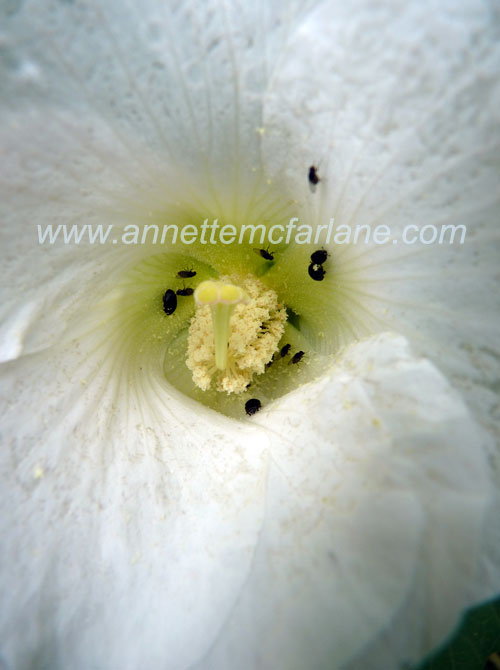
Hibiscus beetles have always been notoriously difficult
to control because of their hard outer shell and
tendency to shelter out of reach within flower petals.
The beetles cause flowers to fall from plants prematurely.
Cultivars with white or pale coloured flowers tend to be
more attractive to hibiscus beetles. Gardeners have several strategies to reduce beetle
populations. Picking up fallen blooms each day reduces
beetle numbers significantly. Placing white or yellow
icecream containers filled with water and a liquid
liquid soap beneath plants can trap a significant number
of adults. Traps should be emptied every few days and
refilled with fresh water and soap.
|
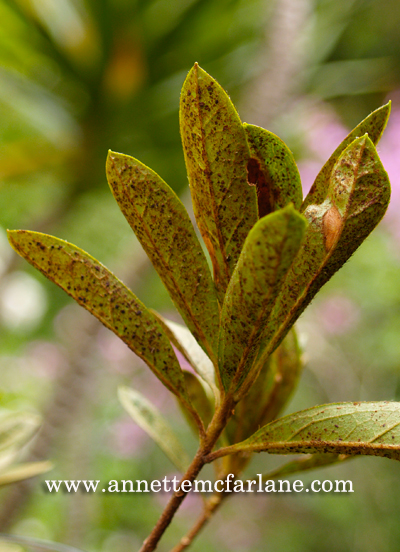
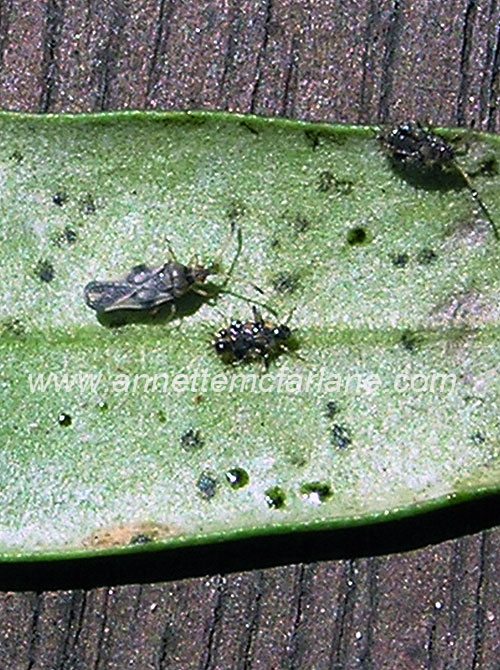
  Lacebug Lacebug
These sucking insects feed on the
undersides of new growth during late
spring, summer and early autumn. The
foliage becomes mottled and pale. The
rust-like lacebug droppings on the
underside of the leaves remain well
after the insects have departed. Azaleas
and olives are particularly affected.
Olive lacebug causes significant leaf
drop on olive trees. Soap or oil sprays,
and even liquid fish fertiliser (it
contains some fish oil) are effective at
controlling these pests, but you may
need to repeat spray at fortnightly
intervals. Make sure you apply sprays to
the undersides of the leaves. Use a
recycled hose end connected applicator
to apply oil spray to shrubs and large
trees. |
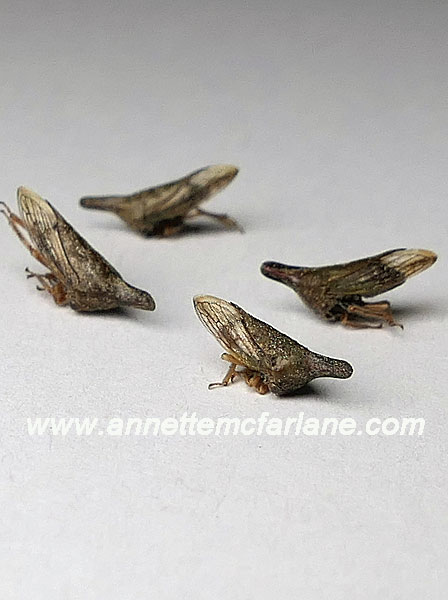
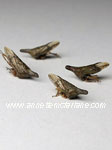 Lantana
bugs Lantana
bugs
These strange looking leaf hoppers are the infamous
lantana bugs (Aconophora compressa). Lantana bugs were
deliberately introduced into Australia from Mexico in
1995 to help control lantana (Lantana camara) which is a
major weed of native bushland. While this insect does
attack lantana plants, it has not proved a very
effective control and is not longer used for this
purpose. Lantana bugs quickly developed an appetite for
ornamental plants including fiddlewood trees (Citharexylum
spinosum), duranta (Duranta repens), lemon verbena (Aloysia
citrodora) and other members of the Verbenaceae family.
Lantana bugs congregate along the stems of plants. They
suck sap and secrete a sticky honey dew on which sooty
mould grows. Repeat applications of oil spray will
smother bugs. Avoid close contact as these insects can
inflict a painful sting. |
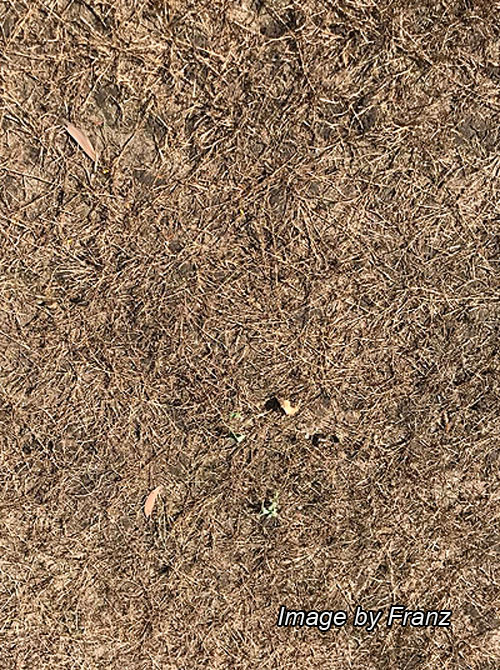
 Lawn
Grubs Lawn
Grubs
Lawn grubs is the collective term for several
lawn pests. This includes the adults and curl grub
larvae of the Argentine and pruinose scarab beetles and
African black beetles; lawn army worm and
sod web worm
which are the larvae of moths as well as the Argentine
stem weevil. All grass types are susceptible, but
infestations are more severe on well-tended lawns as
pests find tender, juicy grass more palatable. Damage is
most common in summer and autumn, particularly after
heavy rainfall promotes grass growth.
Lawns grubs are seasonal and your grass will recover
with the help of natural predators, but this may take
time. Parasitic ichneumon wasps fly over lawns searching
for curl grubs and caterpillars in which to lay their
eggs. These wasps are otherwise harmless. Birds, lizards
and naturally occurring soil fungi and bacteria also
control lawn grubs.
Your best defence against lawn grubs is to increase the
amount of organic matter in the soil by mowing regularly
without a catcher and/or top dressing your lawn with
pulverized cow or sheep mature. Apply small amounts of
organic fertilizer in spring, summer and autumn. Each
winter use a test kit to check the soil pH level and
apply dolomite lime to raise it above 6.5 if required.
Other low toxic control options include moth
zappers/traps; drenching with black strap molasses (1
cup per 9l water); natural soap drenches (suitable for
small, level lawns); bacillus thuringiensis (Dipel/BT);
tea tree and eucalyptus products (EcoGrub); spinosad
products and neem (Eco-Neem).
Lawn grub killers based on longer lasting chemicals that
bind to the soil include bifenthrin. This is also used
to control termites and works by disrupting the nervous
system of any insect that eats or comes in contact with
the sprayed grass. Imidacloprid (the active ingredient
in Confidor) is also sold for lawn grub control, but is
very toxic to bees and other beneficial insects. |
|
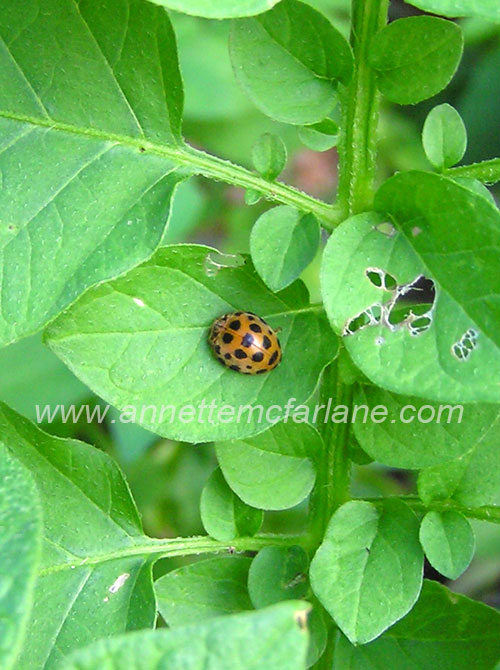
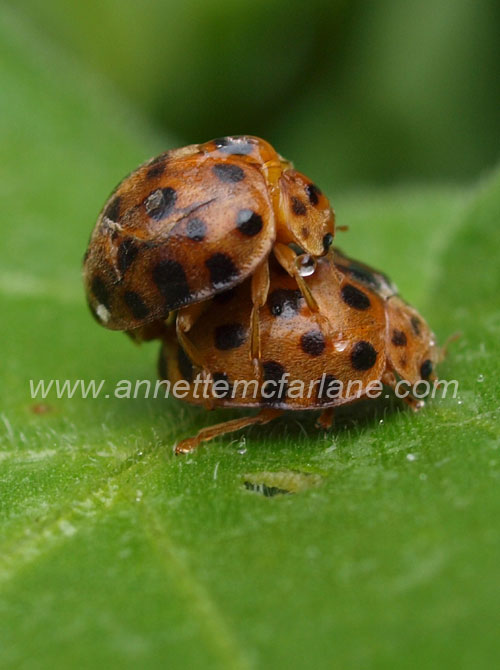
 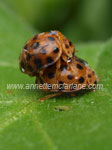 Ladybeetle
(Twenty-eight Spotted) Ladybeetle
(Twenty-eight Spotted)
Most lady beetles are beneficial; however the 28 spotted
lady beetle feeds on the leaves of plants. Lady beetles
with a few spots are likely to be beneficial as both
adults and their larvae feed voraciously on pests such
as aphids, scale and mites. Lady beetles with lots of
black spots (24-28) on a yellow/brown body (pictured)
are leaf eaters that commonly attack potatoes and
eggplants, but also feed on pumpkins, rockmelons and
other vegetable crops. They often migrate from weeds to
vegetables or ornamental plants. Remove any weeds that
might harbour them. Squash them by hand.
|
|
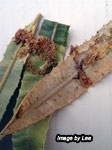 Leaf Miner Leaf Miner
Leaf miners are larvae of night-flying moths whose
larvae tunnel between the upper and lower leaf surfaces
of plants. Ornamental plants including cineraria and
nasturtiums are often attacked, but also native plants
like banksia. Citrus leaf miner causes most concern
among gardeners. Leaf miners are naturally controlled by
a number of beneficial wasps. Remove affected leaves on
ornamental plants if they look unsightly (see Citrus
leaf miner below). |
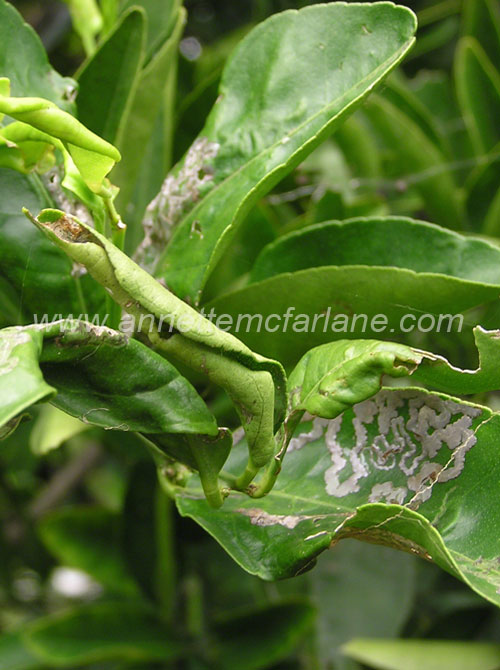
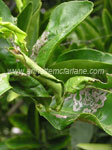 Leaf
Miner on Citrus Leaf
Miner on Citrus
This tiny, white introduced moth (Phyllocnistis citrella) is
night-flying and lays eggs on young citrus leaves and new shoots
particularly mandarins and Meyer lemons. The larvae burrow between the
upper and lower leaf surfaces. The foliage becomes distorted as larvae
eat tunnels through the leaf. Heavy infestations disfigure and retard
new growth on young trees. Effects are cosmetic on mature trees. Flatten
leaves between your thumb and forefinger to squash larvae within the
leaf or prune off affected leaves. Moths avoid leaves treated with oil
sprays. Application should coincide with new growth flushes. Avoid heavy
fertiliser applications during spring and summer when this pest is most
active. Use insects zapping lights during the evening to reduce moth
populations. |
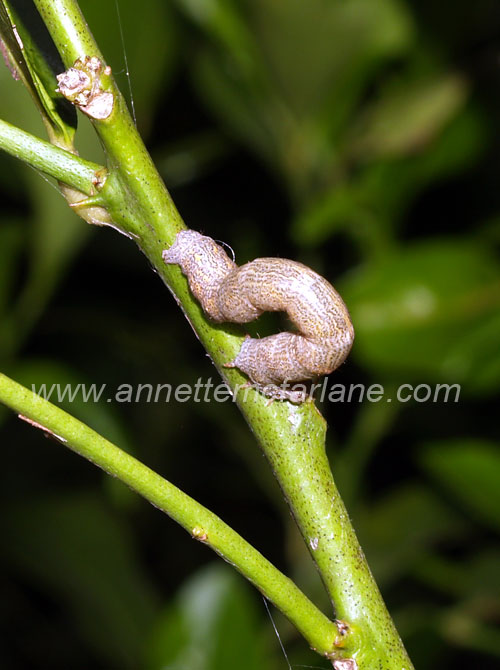
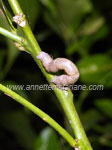 Looper
Caterpillars (also called Inch worms) Looper
Caterpillars (also called Inch worms)
This name describes the way larvae of an enormous group of night flying
moths (Geometridae) inch or loop as they move along a stem. When
stationary, they lay flat against the stem. Colours vary, but as a
general rule their mimic the colour of the plant they feed on. This
makes them difficult to see. They attack a wide range of plants
including native banksias, grevilleas and poinciana trees. Damage can be
severe on young plants. For more
control options see General control options for caterpillars |
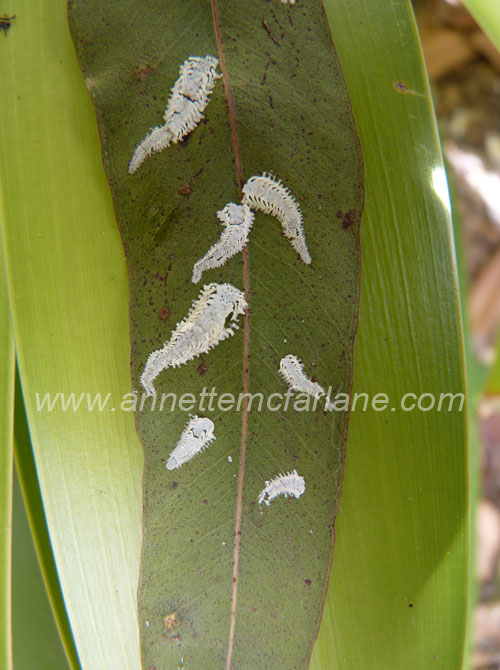
 Lerp Lerp
This insect is a psyllid, but commonly called a lerp.
This is really the name of their lacy, sugary coating
that the insect hides beneath. Rather than produce honey
dew like many other sucking pests, psyllids produce
highly decorative (and edible) lerp coverings. They come
in all shapes and sizes with some appearing remarkably
like tiny seashells. These insects tend to occur on
eucalyptus trees grown outside the limits of their
climatic tolerance. Rather than try to control these
insects, you should look at the overall health of the
tree and try to provide the type of conditions that the
tree would experience in its natural environment. |
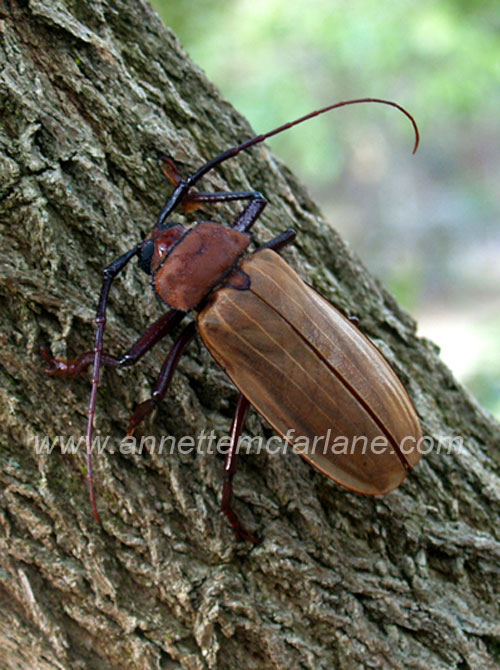
 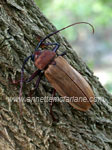 Longicorn Beetles Longicorn Beetles
Native longicorm beetles are easily
distinguished by their rectangular body
shape and enormous recurved antennae.
The female beetle removes the outermost
section of tissue, ringbarking
pencil-thick sections of stem with
remarkable precision. She lays eggs just
beneath the bark in the area immediately
beyond the ring. The tree continues to
transport water and dissolved minerals
from the root system to the foliage via
undamaged water conducting tissue
located on the inside of the stem.
Sugars produced by the foliage are sent
down to the roots, but are interrupted
by the tissue damage at the point where
the eggs are laid. This provides an
abundant food supply for the developing
longicorn larvae. Affected trees attempt
to repair the damage by producing
callous tissue to close the ring-barked
gap, but the affected stem section
usually dies. To control infestations,
prune dead stem sections back to a
growing point. This will reduce beetles
numbers. Alternatively, think of it as
natural pruning. |
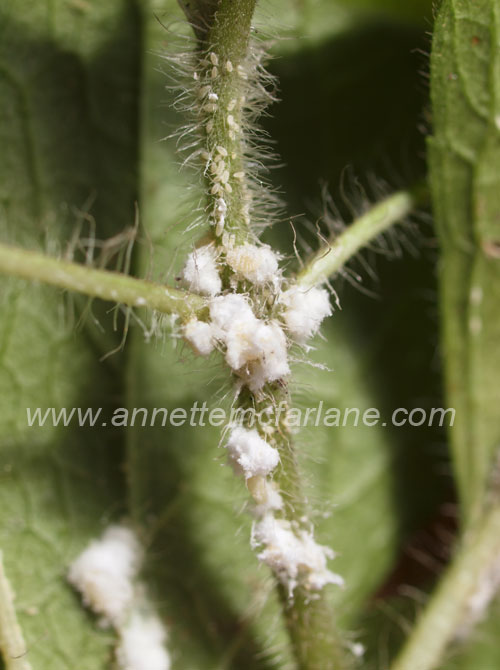
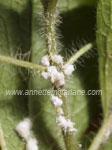 Mealy Bugs Mealy Bugs
These sucking insects hide on the undersides of leaves,
in leaf axils or on plant roots. They suck sap and
weaken plants and are often associated sooty mould and
ants. They are very difficult to control. Soil dryness
can predispose plants to infestations. If you find the
new leaves of bulb plants (agapanthus, clivia, eucharis
lilies etc) emerging with distorted foliage – it is
likely mealy bugs have infested the roots. Hibiscus,
palms, roses, African violets and indoor plants are
commonly attacked, but mealy bugs have a very wide host
range.
Dispose of badly infested indoor plants off-site to stop
pests spreading to other pots. Where mealy bugs on roots
are suspected, drop the entire plant into a bucket of a
strong molasses solution (2 tablespoons per litre water)
or a combination of neem and a soil wetting agent. Leave
to soak overnight. Dip a cotton wool bud in methylated
spirits and apply directly on the pest. Botanical oil
sprays can also be used, but are not suitable for palms,
very soft foliage plants like ferns or those with hairy
leaves like African violets. Use neem sprays combined
with a wetting agent to drench the soil around garden
plants where root systems are infested. Where
infestations are serious or continue to occur, consider
buying in predatory mealy bug eating lady beetles. |
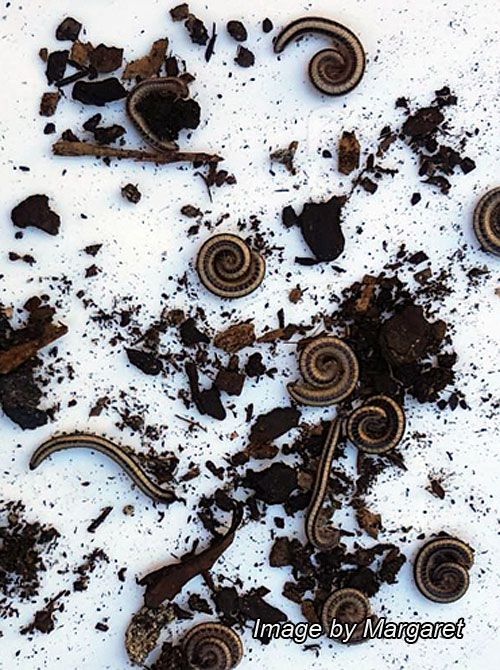
 Millipedes Millipedes
Millipedes are not insects, but they are distantly
related. You find them from time to time in the garden
or in pots, but they usually do not cause major problems
in Qld. They do occur in plague proportions in cooler
climates. They feed on damp organic matter and hide
under leaf litter, in unused pots, or other things
around the garden. If you have piles of damp newspapers
or other things they can hide in you should clean these
away. If they have no-where to hide, they tend to move
on. Wood ash, diatomaceous earth or boric acid (avoid if
you have children or pests) can be used to control them.
Sprinkle around where millipedes are active. |
|
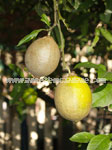  Mites Mites
Mites are not
insects, but closely related to spiders and ticks. They
are largely impossible to see with the naked eye, but
symptoms of attack are easy to spot. There are many
different species including
Broad mite;
Brown rust mites;
Bud mite;
Erinose mite;
Tea mite;
Red spider mite or two spotted mite
and russet mite. Dry conditions
often increase the incidence and severity of mite
infestations. If sowing seed, freeze it 48 hours prior
to sowing to kill mites carried on seed. Dispose of
small annual plants off-site if they are infested.
Dusting sulphur, wettable sulphur, diatomaceous earth or
wood ash pressed on to affected foliage and stems helps
to control mites.
|
|
|
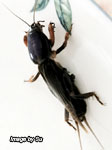 Mole
Cricket Mole
Cricket
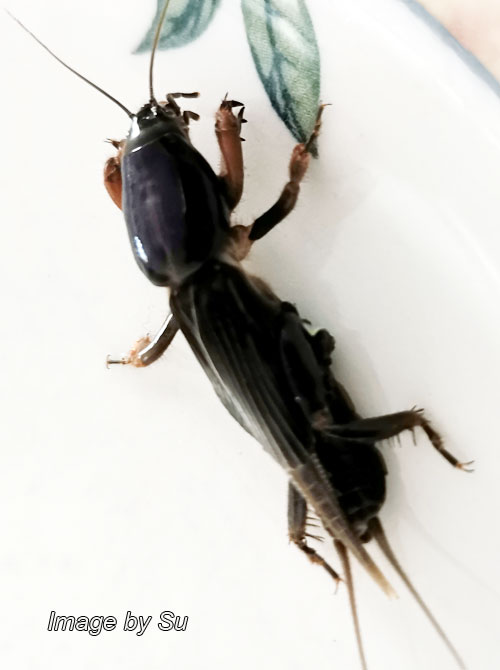
The mole cricket is a largely subterranean insect related to true
crickets and grasshoppers. They tunnel beneath the soil using strong,
modified front legs. They feed on insects and plants. Males sing during
the evening to attract females. While they are often touted as a major
pest of lawns, the sight of a few crickets is not cause for concern.
Commercially available lawn grub controls based on eucalyptus oil may be
used if seasonal conditions see the population explode. Soap and
molasses drenches are another option
[refer
to 'homemade
remedies].
They may invade over-watered and highly fertilized lawns when conditions
elsewhere in the garden are dry. |
 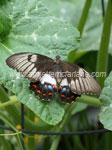 Orchard
swallowtail butterfly Orchard
swallowtail butterfly
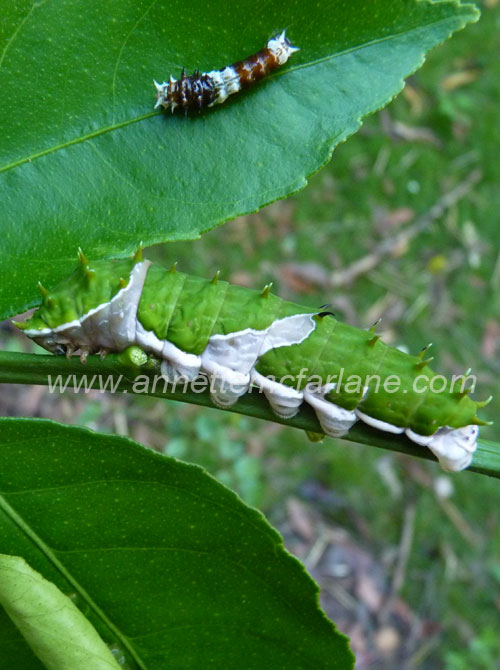
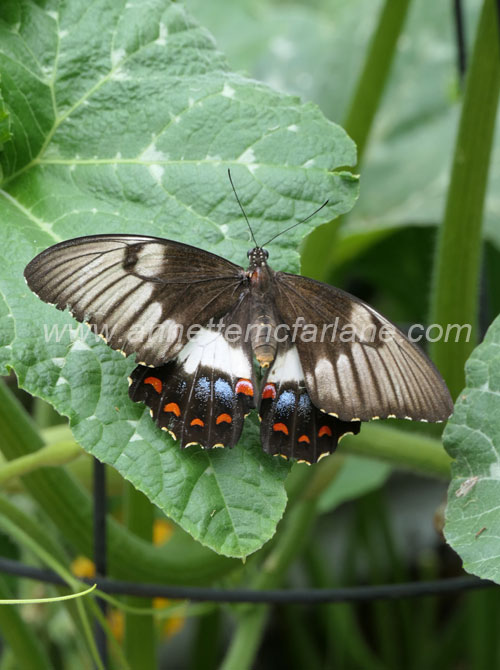
Swallowtail butterflies lay eggs on citrus. The orchard swallowtail
butterfly is the one most familiar to gardeners. The distinctive larvae
look initially like a bird dropping – a brilliant bit of camouflage. As
larvae mature and fatten they take on a familiar green colour,
displaying ‘red horns’ (osmeterium) when threatened. Caterpillars on
young plants can be destructive (pick them off and place on other
citrus), but mature citrus easily cope with chewed leaves. It is a small
price to pay for the enjoyment of these glorious butterflies.
|
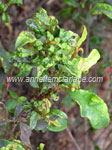 Pimple
Psyllids on Lillypilly Pimple
Psyllids on Lillypilly
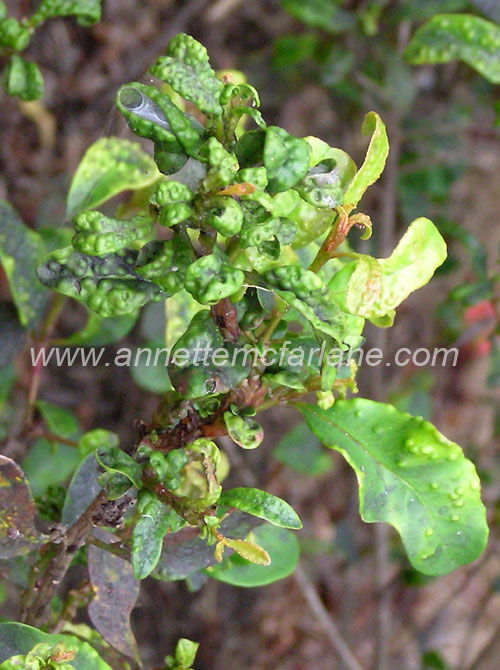
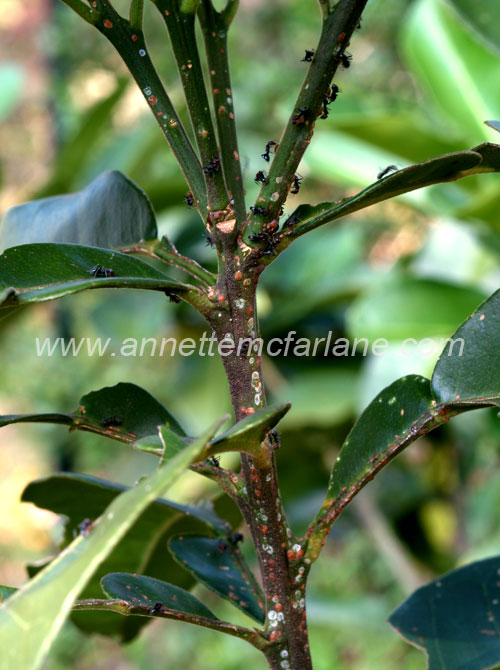
Pimple psyllids are sucking insects that cause puckering
and distortion on the new grow of lillypilly plants. The
insect creates a pimple-like bump on the leaf to hide
under. If you look closely you can often see this
scale-like insect, however even when the insect departs,
the lump remains. Very few lillypilly trees are immune
to this pest, but Syzygium 'Pink Cascade' is one of
them. Select lillypilly varieties carefully. Prune
foliage from affected plants, then spray the new growth
with oil
[refer
to 'homemade
remedies]
or neem and repeat spray whenever plants make
significant new growth. |
|
 Possums Possums
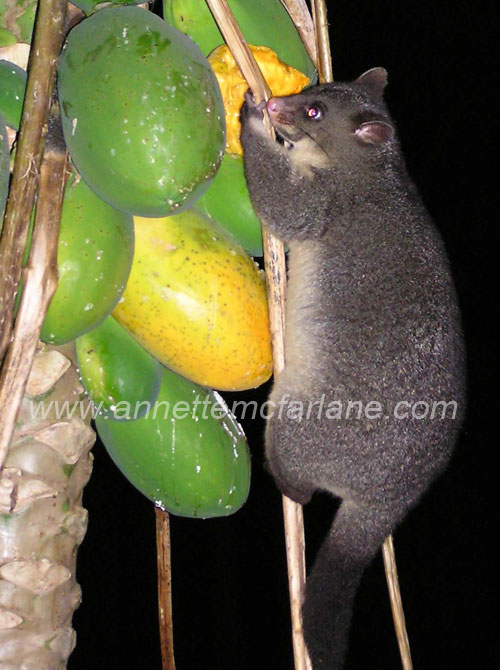
To protect fruit and selected plants from being eaten by possums, provide an
alternative food source like carrots. Accept that these native animals need to
eat some plants and most of the plants they feed on recover quite quickly. To
create a repellent barrier around selected fruit trees or vegetable gardens,
spray oil of cloves at the rate of 6 drops per litre of water each week. On
citrus and other plants with hard leaves the spray can be applied directly to
the plant.
|
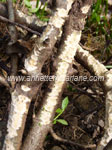 Rat
Damage Rat
Damage
No-one likes to admit that they have rats or other
rodents in the garden and poor possums often get the
blame for damage like this. Rat damage is easy to spot
as you can clearly see the gnaw marks from a rodent's
front teeth. Rats are typically also to blame if you see
passionfruit with a neat circular hole in the shell and
an empty fruit. Rats and mice feed on sweet potatoes,
fallen fruit, macadamia nuts, pellets of fertiliser
applied to gardens and controlled release fertilizer
found in potted plants. Rat controlled can be achieved
through humane traps. |
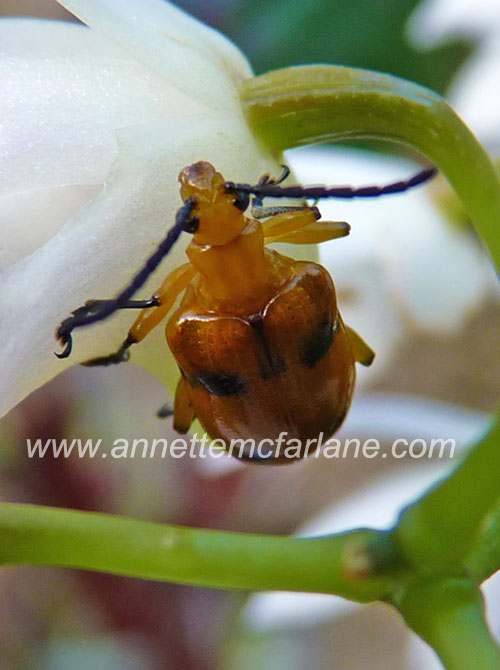
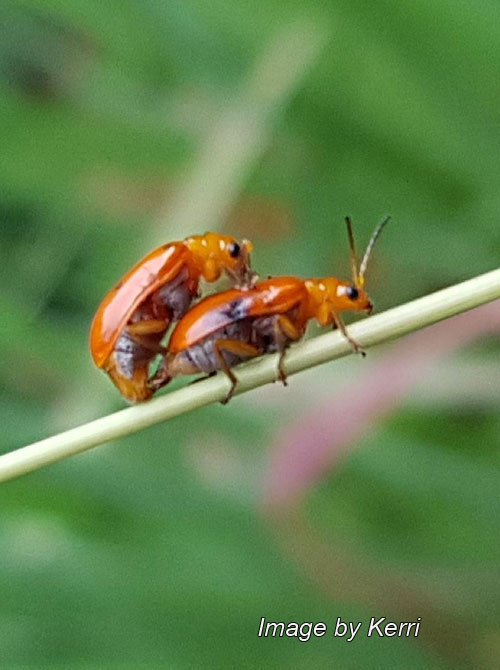
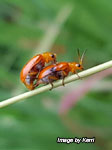 Red-Shouldered
Leaf Beetle Red-Shouldered
Leaf Beetle
Monoleptera australis are small native beetles distinguished by red
markings on a yellow/orange body.
These insects are gregarious and often appear in plague numbers in late
spring and summer, often after
rain. Adults emerge from pupa laid in the soil and decimate plants over
several days. They move on just
as suddenly. These beetles often occur in such numbers that little can
be done to control them. Precious
plants may be netted. Gardeners report some success with chilli spray
that acts both to kill mature
beetles as also as a repellent. Apply chewing insect controls such as
diatomaceous earth sprays. Act
quickly, as beetles secrete pheromones that attract others to the area.
Fortunately, infestations are
short lived and plants quickly recover from damage. |
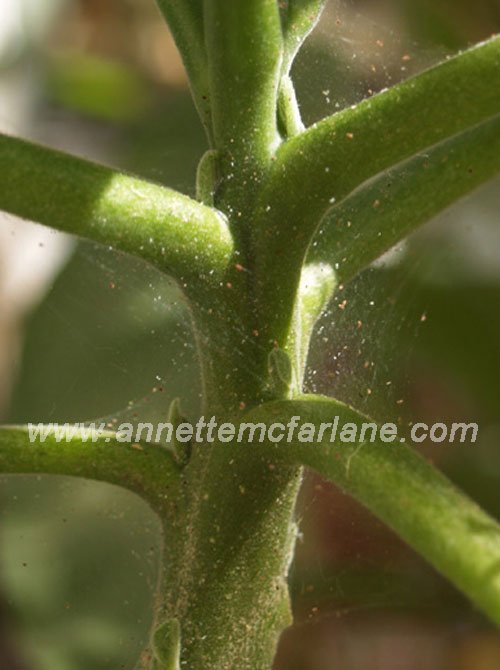
 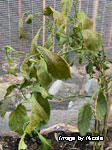 Red
Spider Mite (also known as Two-Spotted Mite) Red
Spider Mite (also known as Two-Spotted Mite)
Red spider mite damage
causes leaves to appear pale and without shine. Red spider mite webbing
can often be seen on plants with serious infestations. Affected fruit
shows skin discolouration. Red spider mites attack a very wide range of
ornamentals and fruit. Soap sprays and wettable sulphur kill mites
through dehydration, while oil sprays suffocate mites [see Do It
Yourself Pest Control]. Palms and other indoor or patio plant species
are particularly susceptible. Water plants outdoors each week, taking
care to spray the hose up underneath the foliage to dislodge mites where
they hide and feed. Alternatively, wipe both sides of leaves with a soft
cloth dipped in warm, soapy water. |
|
Root Knot Nematodes
(See Diseases) |
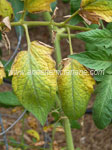 Russet
Mite Russet
Mite
Tomatoes that start to grow well, then gradually develop dry foliage and
smooth, bronze stems may have fallen victim to tomato russet mite.
Invisible to the naked eye, these pests result in plants gradually
becoming weaker until all the foliage is at the top of the plant. Freeze
tomato seed for 48 hours prior to sowing to kill mites carried out over
last a previous crop. Spray each week with wettable sulphur, soap sprays
or diatomaceous earth. Alternatively, carefully press fire cold ash on
the upper and lower leaf surfaces and stems (without throwing it in the
air; breathing it in; or coating the soil surface). It is alkaline and
dehydrating. Keep a covering of ash on the plant for two weeks. Avoid
wetting the foliage. If you have had this pest in past begin treating
new crops when you first plant seedlings. |
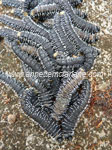 Sawfly
Larvae
(also spitfires) Sawfly
Larvae
(also spitfires)
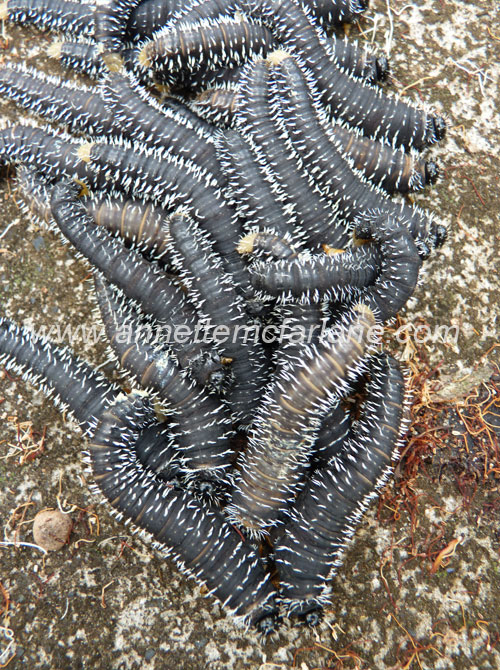
Sawflies or
spitfires feed on eucalyptus foliage.
They are not flies, but wasp larvae.
Adult wasps pupate in the soil (often
for years). They emerge in spring and
summer. Females use a modified egg
laying structure to ‘saw’ into the leaf
to lay eggs (often parthenogenetically –
without the need to mate). The eggs
develop into gregarious, hideous-looking
spitfire larvae - a name that describes
their habit of writhing up and
regurgitating an acrid liquid to repel
predators. The native plant species they
attack cope with the defoliation that
accompanies an infestation of sawfly
larvae, so control is not usually
necessary. You can prune off large
numbers of these simply by cutting off
the leaves that they cluster on.
Molasses or chilli sprays [see Do It
Yourself Pest Control] will also cause
them to drop off. Birds and poultry do
not eat them. |
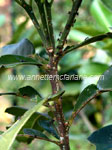  Scale Scale
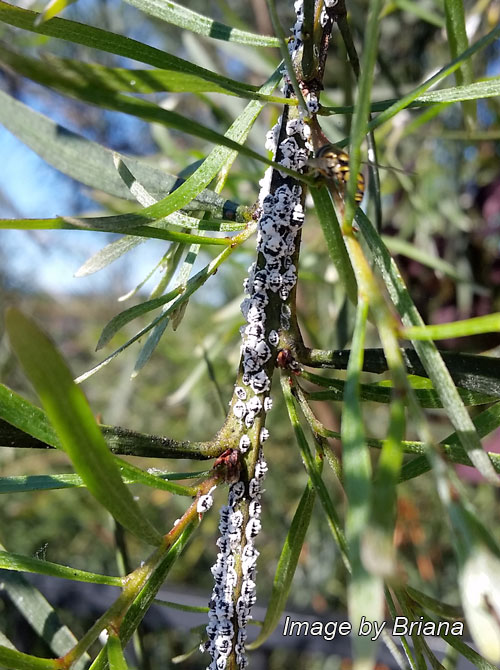
There are many different species of sucking scale pests
including hard wax scale (Ceroplastes sinensis), white
wax scale (Ceroplastes destructor) and pink wax scale (Ceroplastes
rubens), black scale (Saisettia oleae) and soft brown
scale (Coccus hesperidum). Almost all plants are
potentially affected. Scale insects are commonly
associated with ants who harvest honey dew exudate
produced by the scale. Black sooty mould fungus grows on
the honey dew. Oil sprays [see Do It Yourself Pest
Control] will control scale and eventually the sooty
mould will also disappear. Apply fortnightly for six
weeks (3 times) to control new generations of scale that
emerge from beneath the body of mature scale killed by
initial applications. Lady beetles and beneficial wasps
prey on scale pests. See also Seychelles soft scale |
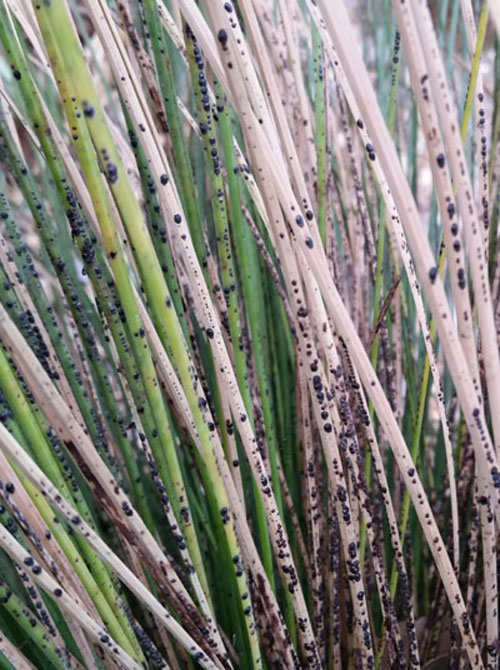
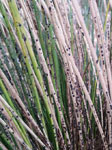 Scale
on Grass Trees Scale
on Grass Trees
Scales pests often hide deep
within the foliage head of native grass trees. Standard
treatments are rarely completely effective. The natural
solution is fire. Use a small gas blow torch or the type
you use in the kitchen to caramelise sugar to simulate a
bush fire. Burn the head of the plant you will toast the
scale! Take the necessary precautions to prevent the
fire spreading. Treated plants develop a fresh green
head of foliage. |
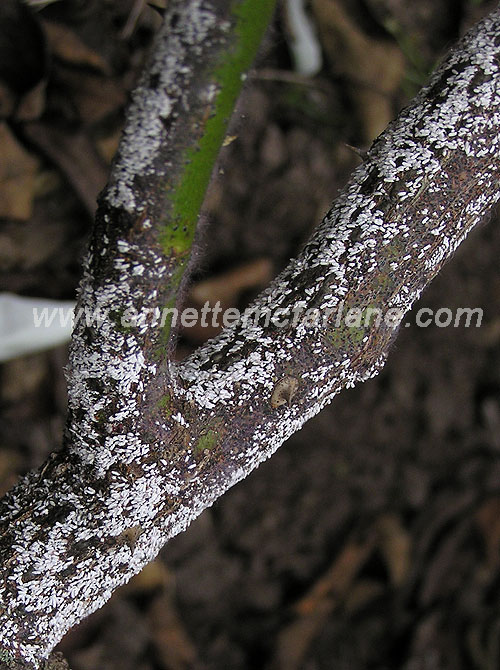
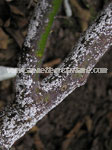 Scale
on Roses Scale
on Roses
Infestations of white rose scale can be particularly
debilitating to roses, eventually killing plants. White
rose scale often multiplies rapidly during winter. Where
infestations are particularly heavy, use warm soapy
water and a soft scrubbing brush to remove the majority
of the scale. A follow up application of an oil based
spray [refer
to 'homemade
remedies]
will usually bring about control. Repeat as often as
necessary. Fertilise affected roses to compensate for
the loss of vigour resulting from the infestation.
|
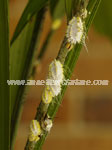 Seychelles
Soft Scale
(Icerya seychellarum) Seychelles
Soft Scale
(Icerya seychellarum)
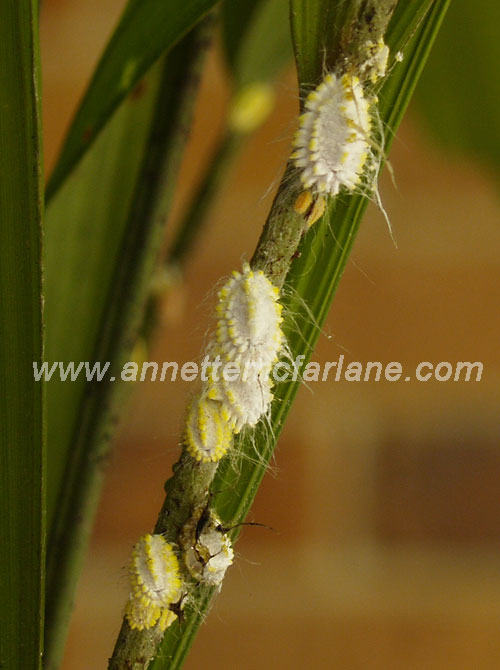
This sucking pest (Icerya seychellarum) is commonly confused with mealy
bugs, but has a distinct, oval shape with white/yellow hairy surface
protecting an orange body. You find females mostly on stems and
juveniles on the midrib on the undersides of leaves. Males are orange in
colour. This pest attacks everything from citrus to succulents. Like the
scale and mealy bugs they are related to, Seychelles soft scale is
associated with ants and black sooty mould fungus. The mealy bug
ladybeetle (Cryptolaemus montrouzieri) is a natural predator. Prune
infected growth from highly infested plants. Oil sprays [see Do It
Yourself Pest Control] applied fortnightly will help to control
outbreaks. |
 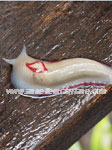 Snails
and Slugs Snails
and Slugs
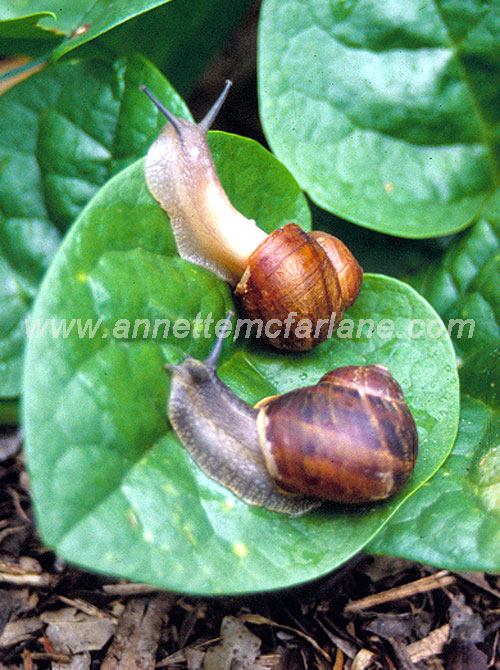
Slugs and snails are molluscs. Some eat plants; some eat
moss and fungi; some prey on other snails and slugs.
Saucers of homemade bee attract snails and slugs.
Non-toxic iron-based baits are the safest of the snail
and slug pellets commercially available. Thin copper
bands sold through some nursery outlets and mail order
companies make effective barriers. Simply place the
copper around the edge of the garden bed, fixing it to
timber edging or brickwork. As snails and slugs attempt
to pass over the copper barrier they receive an
electrical shock that repels them. Clear dead leaves
from the base of plants with strappy foliage. Clean up
pots and other materials where slugs and snails hide.
Poor the waste from your coffee plunger or spread coffee
grounds over areas where snails and slugs congregate.
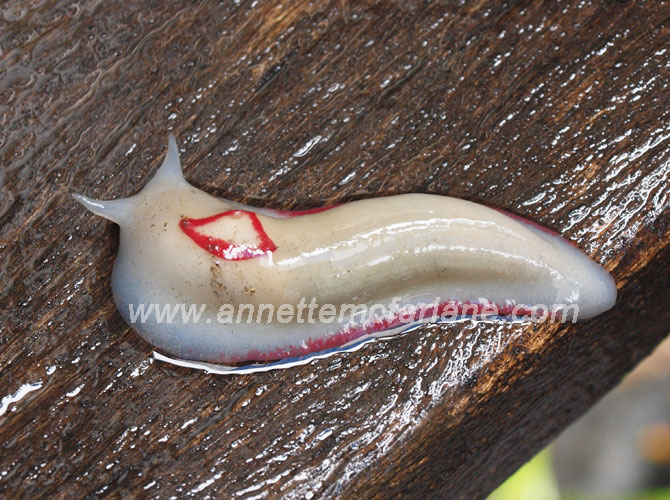
They hate caffeine! The large native red triangle slug
(pictured above left) eats
mould and algae and does not damage plants. |
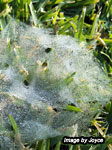 Sod
Web Worm Sod
Web Worm
The sod web worm is the caterpillar of a moth (Herpetogramma
licarsisalis). It is a pest of lawns and grasses and often grouped under
the general category of lawn grubs. The caterpillar creates a
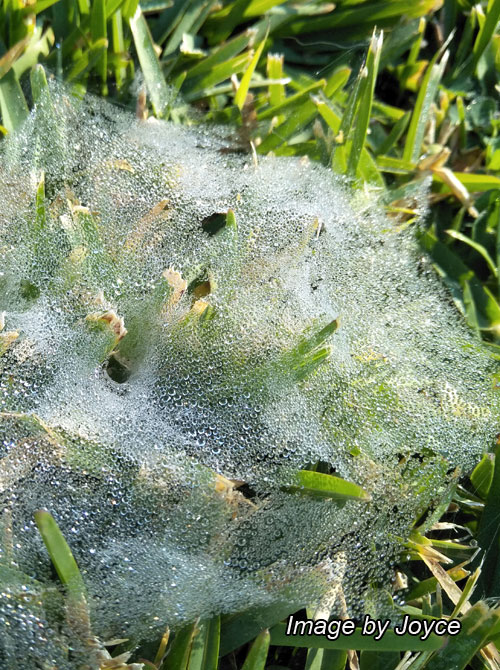
web-like covering under which to hide while it feeds. Early morning dew
often makes this webbing more obvious. Standard controls use for lawn
grubs apply to sod web worm, but wild birds and free ranging poultry can
be used to naturally control this pest. See
Lawn grubs |
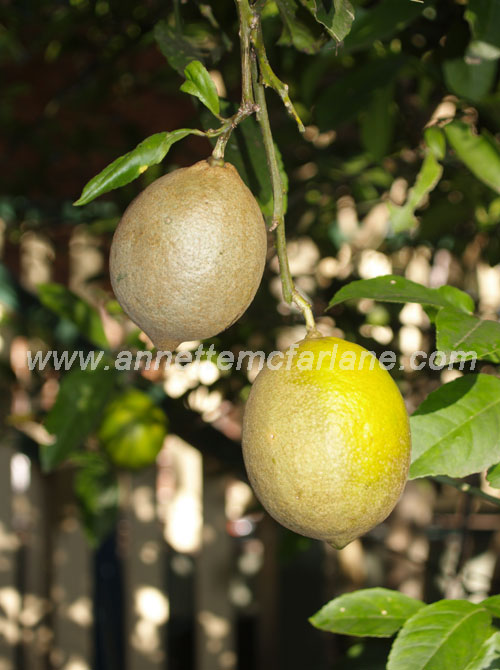
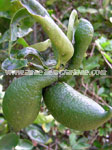
Spined Citrus Bug
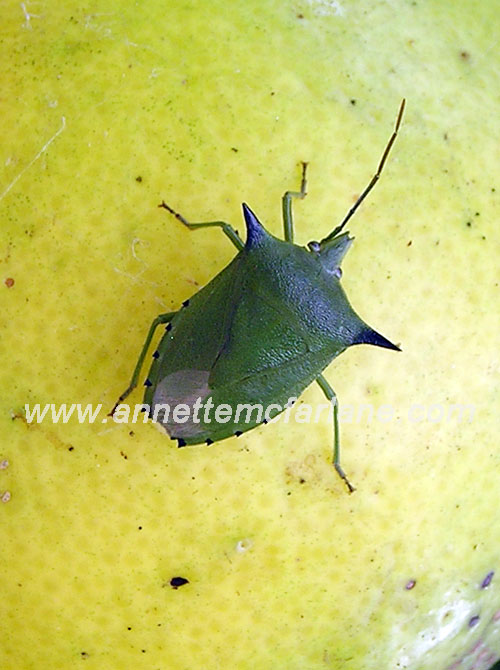
These sucking insects vary in colour when young. Adults
are leaf green with the appearance of pointed shoulders
and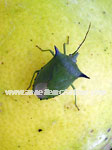 are well camouflaged. They feed by piecing the fruit of
a variety of citrus and sucking up the liquid contents.
Fruit develops dry patches and premature fruit fall is
common. Lemons and mandarins are particularly
susceptible. Even a small infestation can do
considerable damage to your harvest.
are well camouflaged. They feed by piecing the fruit of
a variety of citrus and sucking up the liquid contents.
Fruit develops dry patches and premature fruit fall is
common. Lemons and mandarins are particularly
susceptible. Even a small infestation can do
considerable damage to your harvest.
Wear gloves and pick them off by hand or use a leaf
blower or vacuum cleaner to suck them up. Oil sprays
[see Do It Yourself Pest Control] or neem (on
non-fruiting trees only) can be effective, but needs to
be applied directly to the insect.
|
  Tea
Mite Tea
Mite
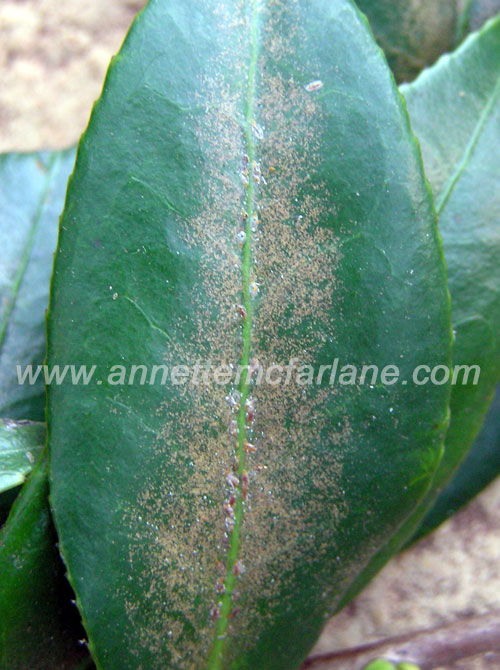
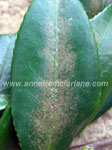
Camellias attacked by tea mites develop a bronze
discolouration down the central midrib of the leaf. Left unchecked,
bronzing envelops the entire leaf and poor growth and reduced flowering
results. Damaged leaves never regain their green leaf colour. Dry
atmospheric conditions and poor air circulation favour tea mite
infestations. Oil sprays are effective at controlling outbreaks, but
must be applied to both sides of the foliage
[refer
to 'homemade
remedies'].
Damaged leaves do not regain their green colour.
|
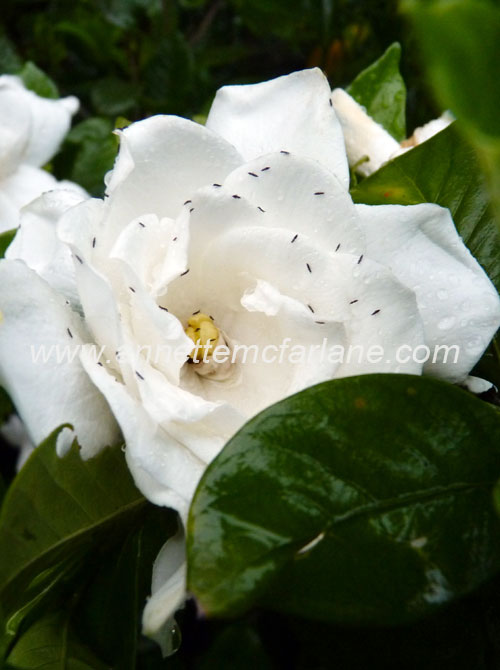
 Thrips Thrips
Thrips are slender black or grey sucking insects that
commonly attack flowers and developing fruit. Their
feeding activity can cause premature flower drop;
failure of flowers to set fruit; flower deformities and
twisted, puckered or malformed fruit. Plants commonly
affected include beans, tomatoes, onions, gardenias,
azaleas, roses, bulbs and native plants. Thrips are very
hard to spot. To check for thrips, cut a few blooms and
place them in a clear plastic bag or a glass jar. Leave
overnight and by the morning you should be able to spot
the insects that have emerged from the blooms.
|
 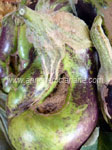 Do
not expect to see live thrips on fruit as damage occurs when the fruit
first formed. To control thrips, treat the developing flowers regularly
with either soap sprays, wettable or dusting sulphur. Oil sprays can be
used on ornamentals or other plants whose foliage is suitably hardened.
Many beneficial insects prey on thrips providing natural biological
control. Do
not expect to see live thrips on fruit as damage occurs when the fruit
first formed. To control thrips, treat the developing flowers regularly
with either soap sprays, wettable or dusting sulphur. Oil sprays can be
used on ornamentals or other plants whose foliage is suitably hardened.
Many beneficial insects prey on thrips providing natural biological
control.
|
|
Twenty Eight Spotted Lady Beetle
[see
ladybeetle above] |
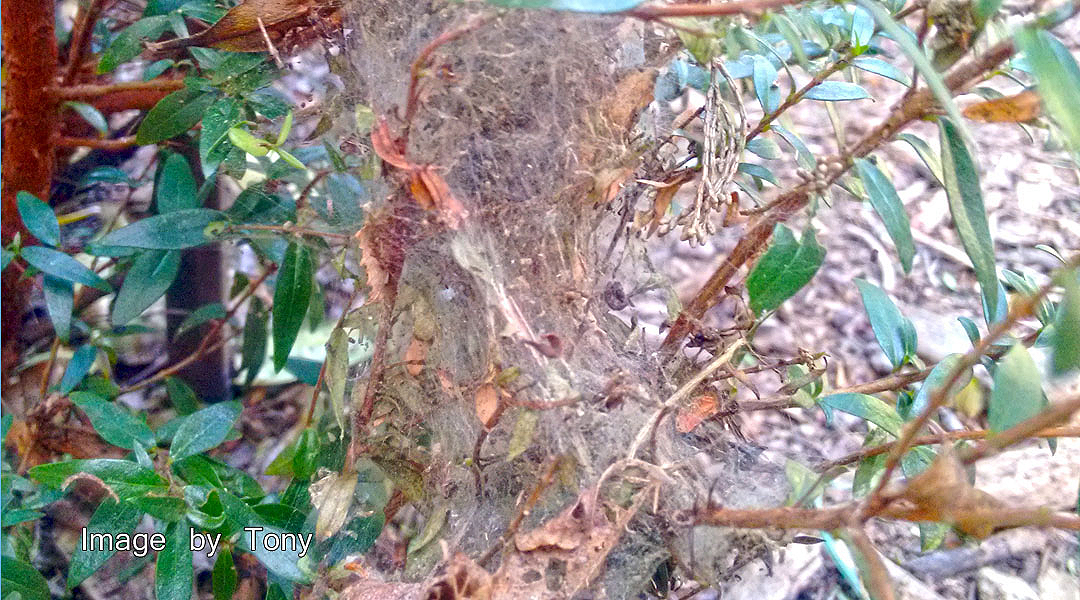
 Webbing
Caterpillars Webbing
Caterpillars
There are several different types of webbing
caterpillars. They are generally the larvae of moths.
They create a webbed nest to hide from birds and other
predators. If you pull the webbing apart you will find
the caterpillar hiding inside. Cut off and dispose of
the affected branches - they often affect the tip growth
of bottlebrush or small internal branches of paperbarks
(Melaleuca) and tea tree (Leptospermum). Alternatively,
just remove the webbing by hand when you see it. Plants
recover quickly. |
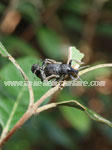 Weevils Weevils
Weevils are a type of beetle and are easy to recognise
because they have a large snout. Some weevils are
incredibly colourful, while others are plain black or
brown. Some chew leaves and stems; others feed on roots
or fruit. In most cases control is not warranted. Please
note: These are not the weevils that you find in flour
or grains which are typically the larvae of moths (Plodia
interpunctella or Kuehniella species), Pantry moths are
typically in products when you buy them and emerge
during storage. To kill pantry moths place flour and
grains in the freezer for 48 hours, then store in sealed
containers in the pantry or in the refrigerator. |
 White
Fly White
Fly
White flies suck sap and transfer disease. They attack ornamental and
edible plants, but gardeners are most likely to encounter them in the
vegetable garden. These tiny white insects hide beneath foliage and
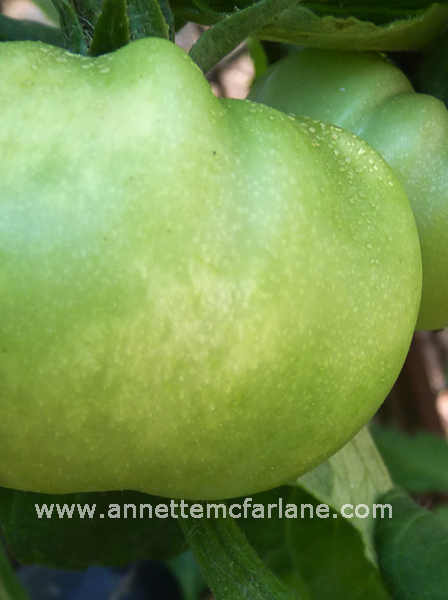
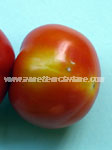
disperse in clouds of flying insects when disturbed. Tomatoes affected
by white fly often have white discolouration and fail to ripen evenly.
Encourage beneficial insects or buy in predatory wasps (Encarsia formosa).
Apply a spray soap or a strong jet of water beneath the foliage each
day. Use oil sprays, but avoid tender plants. Hang yellow sticky traps.
Place a layer foil or other shiny recycled material beneath plants as
mulch - white flies hate the reflected light. Cover plans with exclusion
netting at planting. white fly on tomato pic |
|
Top of Page
[Privacy
Policy]
© Copyright Annette McFarlane 2007-
All Rights Reserved |